CeMAP 3 Case Study Guide: How to Pass ASEW and ASSC
A practical guide to CeMAP 3 — how the case studies work, the difference between ASEW and ASSC, how to read and answer case-study questions, and the most common mistakes candidates make.
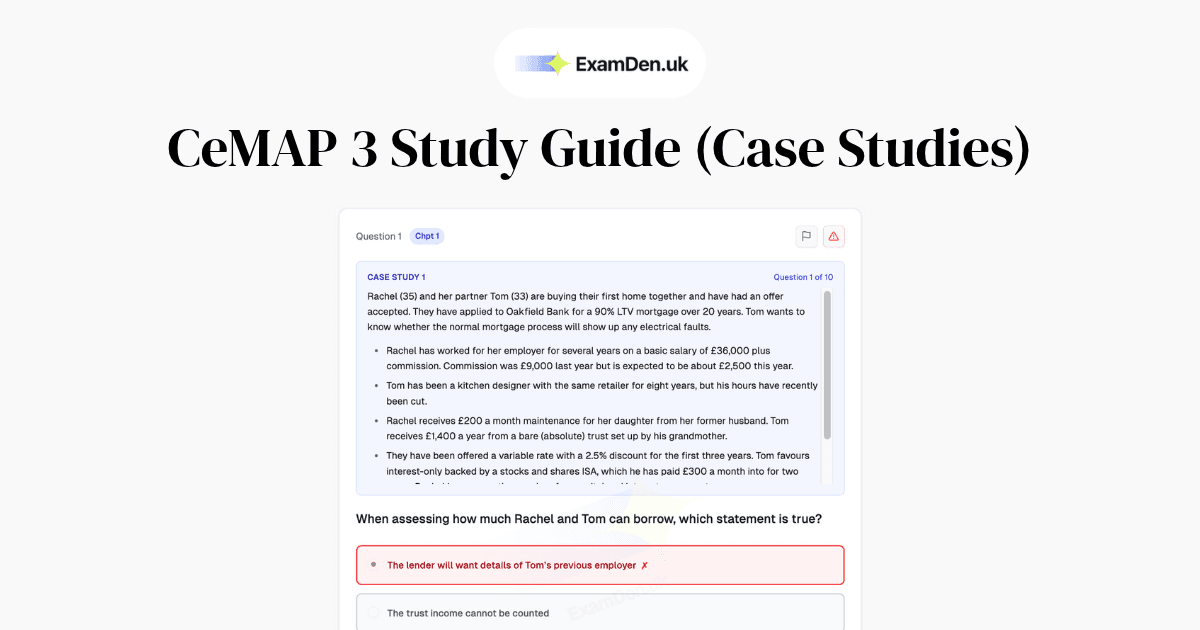
CeMAP 3 is the final exam in the CeMAP qualification, and it's unlike anything else in the qualification. There are no standalone MCQs — the entire paper is case-study based. You get 6 client scenarios, each with 10 questions, over 2 hours.
This makes CeMAP 3 the exam where "knowing the material" isn't enough. You have to apply it. The case studies present specific client circumstances, and the correct answer depends on those details — not on general principles or textbook rules.
📋 CeMAP 3 at a Glance
- One paper: ASEW (England & Wales) or ASSC (Scotland)
- Format: 6 case studies × 10 MCQs each = 60 questions
- Duration: 2 hours (120 seconds per question including reading time)
- Pass mark: 42/60 (70%)
- Synoptic: draws heavily on CeMAP 2 content (MRT1 and MRT2)
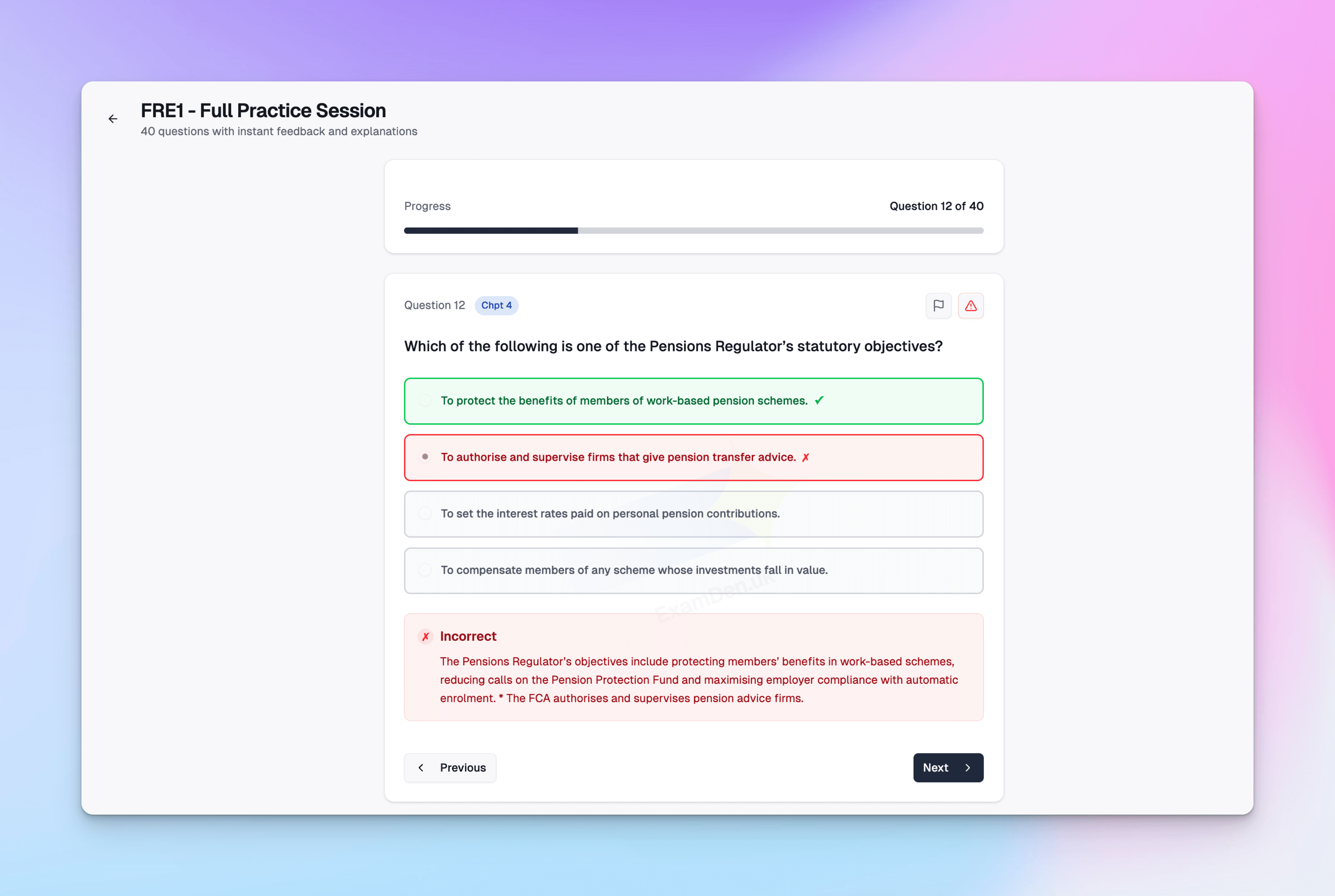
On ExamDen.uk, every question comes with a clear explanation linked to the relevant learning outcome
ASEW vs ASSC: Which One Do You Sit?
CeMAP 3 comes in two variants. They're the same unit in two regional versions — you sit whichever one matches where you'll be advising:
ASEW (Assessment of Mortgage Advice Knowledge — England & Wales) covers English and Welsh property law, including:
- The conveyancing process in England and Wales
- Freehold and leasehold
- Land Registry
- Stamp Duty Land Tax
ASSC (Assessment of Mortgage Advice Knowledge — Scotland) covers Scottish property law, including:
- Missives (the Scottish equivalent of exchange of contracts)
- Sequestration (the Scottish equivalent of bankruptcy)
- The Mortgage Rights (Scotland) Act 2001
- Land and Buildings Transaction Tax (LBTT) instead of SDLT
The mortgage advice content — products, MCOB rules, affordability, protection — is the same in both variants. The difference is in the property purchase process and the legislation that applies.
🏴 If you're advising in Scotland, make sure your study materials and practice questions cover ASSC specifically. The property law differences are heavily tested.
What the Case Studies Look Like
Each of the 6 case studies presents a client scenario — a person or couple looking for mortgage advice. The scenario typically includes:
- Client details: age, income, employment status, financial commitments
- Property details: type, value, condition, location
- Financial situation: savings, existing debts, current mortgage (if any)
- Goals: what the client wants to achieve (buy a first home, remortgage, buy-to-let, release equity, etc.)
You then answer 10 MCQs about that scenario. The questions test your ability to:
- Recommend suitable mortgage products
- Apply MCOB rules to the specific circumstances
- Identify protection needs
- Handle the property purchase process
- Spot ethical or regulatory issues
The 6 Learning Outcomes
| LO | Topic |
|---|---|
| 1 | Analyse mortgage solutions and their suitability for different customers |
| 2 | Analyse property purchase and specialist lending (BTL, second charge, bridging) |
| 3 | Apply MCOB rules and regulations on mortgage advice and protection sales |
| 4 | Apply ethical and sustainable advice principles, including affordability |
| 5 | Analyse mortgage protection needs and products |
| 6 | Analyse the house-buying process, key parties and mortgage-related legislation |
The key word across all six is apply or analyse. This isn't a recall exam — it's an application exam.
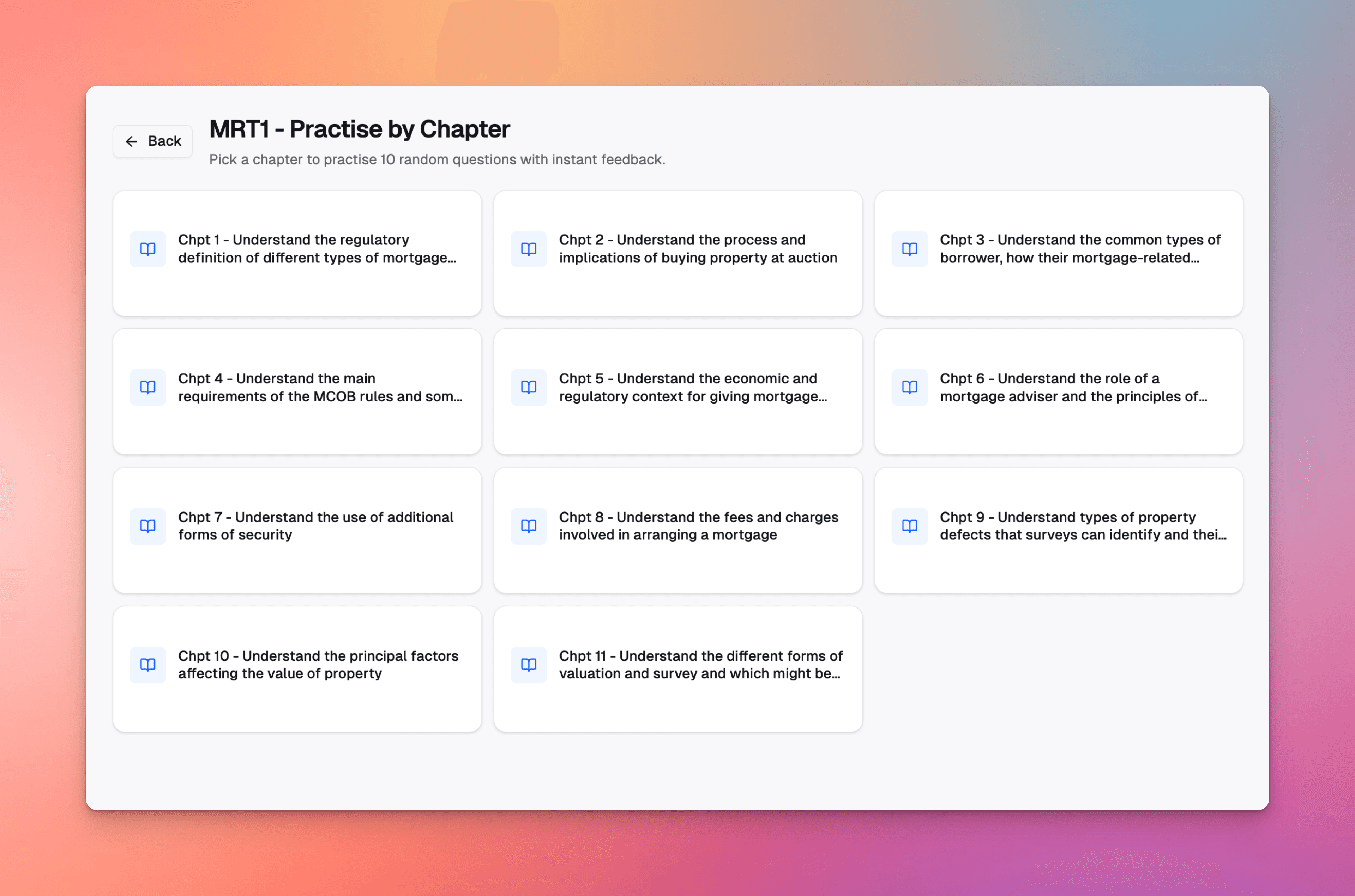
On ExamDen.uk, practise one learning outcome at a time before you take a full case-study mock
How to Read a Case Study
The single most important skill for CeMAP 3 is reading the scenario properly. Here's a structured approach:
Step 1: Read the whole scenario first
Before looking at any questions, read the entire case study. Understand:
- Who is the client?
- What do they want?
- What are the key facts (income, property value, deposit, debts)?
- Are there any complications (bad credit, self-employed, non-standard property)?
Step 2: Identify the type of scenario
Most case studies fall into recognisable categories:
- First-time buyer — affordability, deposit, suitable products, protection
- Remortgage — reasons for remortgaging, costs vs benefits, product comparison
- Buy-to-let — BTL-specific rules, rental coverage calculations, tax implications
- Moving home — porting the mortgage, additional borrowing, surveys
- Debt consolidation — risks, affordability implications, suitability
- Equity release or later-life lending — specialist products, advice requirements
Step 3: Answer from the scenario, not from memory
This is where most candidates go wrong. The question might ask "Which mortgage product would be most suitable for this client?" and two options could both be reasonable products in general. But the correct answer is the one that fits this client's specific circumstances as described in the case study.
Look for the detail that makes one answer better than the others:
- Does the client need payment flexibility? (Offset mortgage might be suitable)
- Is the client risk-averse? (Fixed rate, not tracker)
- Is there a specific time horizon? (Match the fixed period to the plan)
- Is there an affordability constraint? (Interest-only might be considered, with conditions)
⚠️ The most common CeMAP 3 mistake: answering based on what a good adviser would generally recommend, instead of what the specific scenario supports. General knowledge gets you close — scenario details get you the mark.
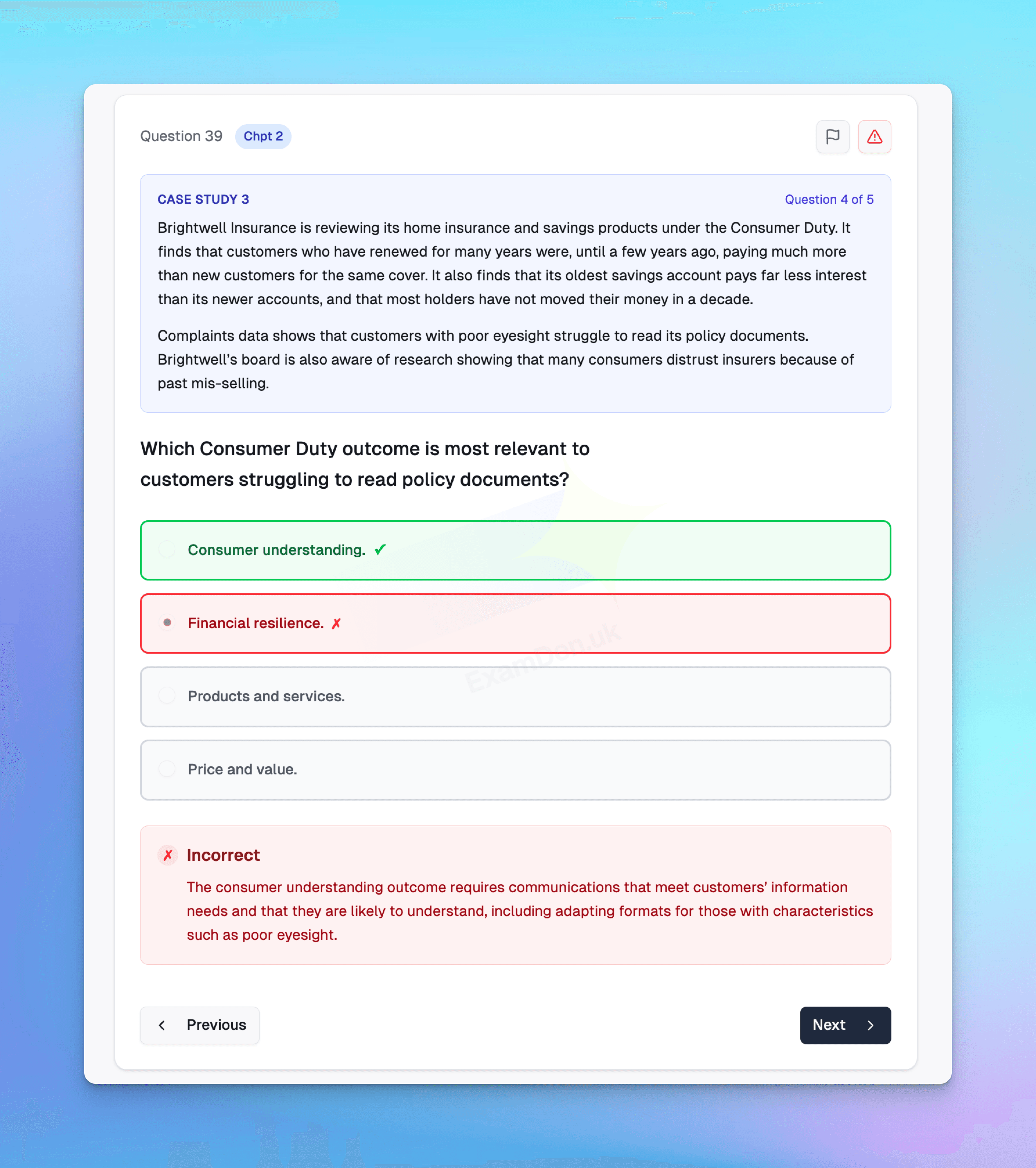
On ExamDen.uk, case-study questions ask you to read the scenario first, then answer from those facts
Time Management
You have 2 hours for 60 questions — that's 2 minutes per question, or roughly 20 minutes per case study.
Budget your time like this:
- 2–3 minutes to read the case study carefully
- 1–1.5 minutes per question (10 questions = 10–15 minutes)
- 2–3 minutes buffer per case study for tricky questions
That gives you about 17–18 minutes per case study, with 12–18 minutes spare at the end. Use the buffer to go back to any flagged questions.
| Checkpoint | Expected progress |
|---|---|
| 30 minutes | 2 case studies done |
| 60 minutes | 3–4 case studies done |
| 90 minutes | 5 case studies done |
| 120 minutes | All 6 done, flagged questions reviewed |
Don't spend 25 minutes on one case study. If you're stuck on a question, flag it and move on. Coming back with fresh eyes after the other case studies often helps.
Common Mistakes on CeMAP 3
1. Not reading the scenario carefully enough
Candidates who rush through the case study miss the detail that changes the answer. A scenario might mention that the client "has a variable income" buried in the second paragraph — and that detail determines which product is suitable.
2. Answering from CeMAP 2 recall
You studied MRT1 and MRT2 recently, so the general rules are fresh in your mind. But CeMAP 3 doesn't test whether you know the rules — it tests whether you can apply them to a specific client. The answer that's "usually correct" might not be correct for this scenario.
3. Forgetting about protection
Several case studies will include questions about mortgage protection — life insurance, critical illness cover, income protection. Candidates focus on the mortgage product and forget that protection advice is part of the scenario.
4. Ignoring the Scotland-specific content
If you're sitting ASSC, make sure you've studied Scottish property law. Missives, sequestration, LBTT and the Mortgage Rights (Scotland) Act are tested specifically, and the English/Welsh equivalents won't help.
5. Poor time management
Spending too long on the first 2–3 case studies means rushing the last ones. Every case study has the same number of marks (10), so it's better to work steadily through all 6 than to perfect the first 3 and rush the rest.
Study Strategy for CeMAP 3
Timing
Most candidates sit CeMAP 3 last, immediately after passing CeMAP 2. This makes sense because CeMAP 3 draws heavily on MRT1 and MRT2 content. Don't leave a long gap between modules 2 and 3 — the mortgage product knowledge needs to be fresh.
Practice approach
- Start with the study material for your variant (ASEW or ASSC). Focus on the property purchase process and any legislation specific to your region.
- Practise individual case studies before taking a full 6-case mock. Get used to reading scenarios and answering questions from the facts provided.
- Take at least 2 full timed mocks before the real exam. The 2-hour duration is longer than any other CeMAP unit, and maintaining concentration across 6 case studies takes practice.
- Review your weak learning outcomes after each mock. If you're consistently losing marks on protection questions, for example, go back and revise that area.
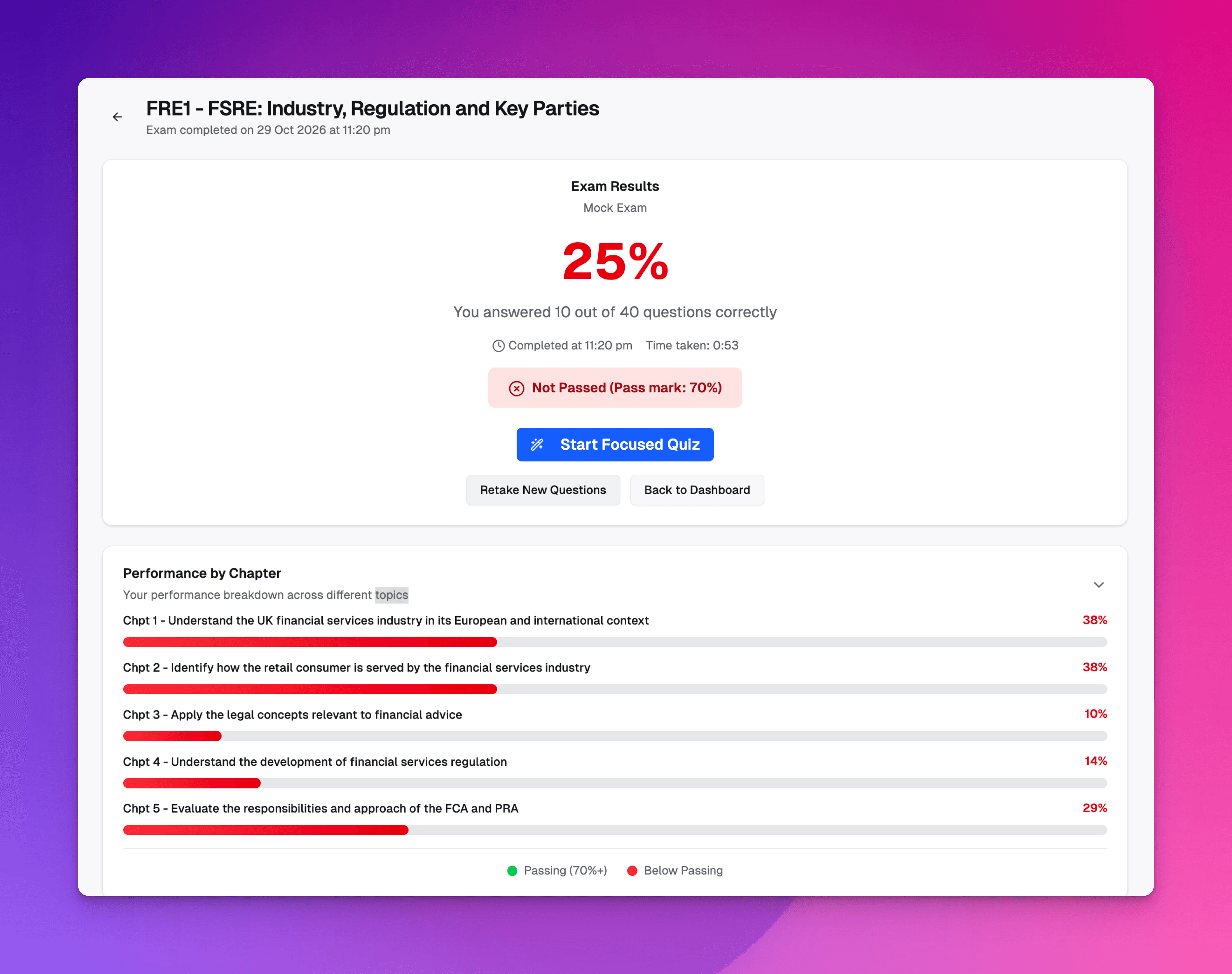
On ExamDen.uk, a timed mock shows your score against the 70% pass mark, and which chapters are below it
Key topics to revise before CeMAP 3
Even though CeMAP 3 is synoptic, some areas come up more frequently in case studies:
- Product suitability — matching mortgage products to client circumstances
- Affordability — income multiples, net disposable income, stress testing
- MCOB rules — especially around suitability assessments and disclosure
- Protection — life cover, critical illness, income protection linked to mortgage advice
- Property purchase process — conveyancing (ASEW) or missives (ASSC), surveys, completion
- Specialist lending — buy-to-let, bridging, second charges
Ready to Practise?
The ASEW/ASSC question bank on ExamDen covers all 6 learning outcomes with case-study practice in the same format as the real exam — 6 scenarios with 10 questions each, timed at 2 hours.
For the full picture on all three CeMAP modules, see our complete CeMAP study guide.
CeMAP 3 FAQs
Ready to Put This Strategy Into Action? 💯
Practise CeMAP 3 case studies in the real 6 × 10 format, with detailed explanations for every answer.

The ExamDen.uk Team
ExamDen.uk builds exam-style question banks and timed mocks for CeMAP, Cert CII and CII R01–R05, helping UK professionals prepare for their financial services exams.