CII IF2 Revision Guide (2026): Learning Outcomes and Exam Tips
CII IF2 revision guide: every learning outcome explained with question counts, priority topics and exam tips for the General Insurance Business exam.
This IF2 revision guide covers every learning outcome in the exam, in order of question weight. Use it during your final revision to check that you've covered each topic and know where to focus your remaining study time.
For a broader study plan and common mistakes, see our complete IF2 study guide. For practice questions, try these 5 free IF2 mock questions.
📋 IF2 Exam Recap
- 100 standard MCQs in 2 hours
- Pass mark: 70% (at least 70 out of 100)
- 7 learning outcomes — LO1 + LO2 = 67% of the exam
- No MR questions and no complex calculations
---
LO1: Insurance Products and Associated Services — 36 Questions (36%)
The biggest learning outcome in IF2. Revise each product class:
Motor Insurance
- Levels of cover. RTA only (legal minimum — third-party bodily injury + emergency treatment charges), third party only, third party fire and theft, comprehensive. Know what each level includes and excludes.
- Motor certificates and cover notes. The legal requirement to have a certificate of motor insurance. Temporary cover notes.
- Fleet insurance. How fleet policies differ from individual motor policies. Fleet rating.
- Motor legal expenses. What it covers (uninsured loss recovery, legal costs). Usually an add-on.
- MIB. The Motor Insurers' Bureau — compensating victims of uninsured and untraced drivers.
- Green cards. Proof of insurance for driving abroad. The Green Card system.
Property Insurance
- Buildings and contents. Domestic and commercial. Sum insured, reinstatement basis, day-one values.
- Fire and special perils. Named perils cover: fire, lightning, explosion, aircraft damage, riot, malicious damage, storm, flood, burst pipes, impact, earthquake, subsidence.
- All risks. Broader than named perils — covers accidental loss or damage unless specifically excluded.
- Business interruption. Gross profit basis, increased cost of working, indemnity period. How BI links to material damage cover.
- Terrorism. Pool Re — the government-backed reinsurer for terrorism risk. How terrorism cover works in practice.
Liability Insurance
- Employers' liability. Compulsory under the EL Act 1969. Minimum cover £5m (most policies offer £10m). Certificate must be displayed or accessible electronically.
- Public liability. Third-party bodily injury or property damage. Not compulsory (with some exceptions).
- Products liability. Liability for injury or damage caused by defective products. Covered under public liability or standalone.
- Professional indemnity. Negligent advice or services. Claims-made basis. Run-off cover.
- Directors' and officers' (D&O). Personal liability of directors and officers. Side A, B and C cover.
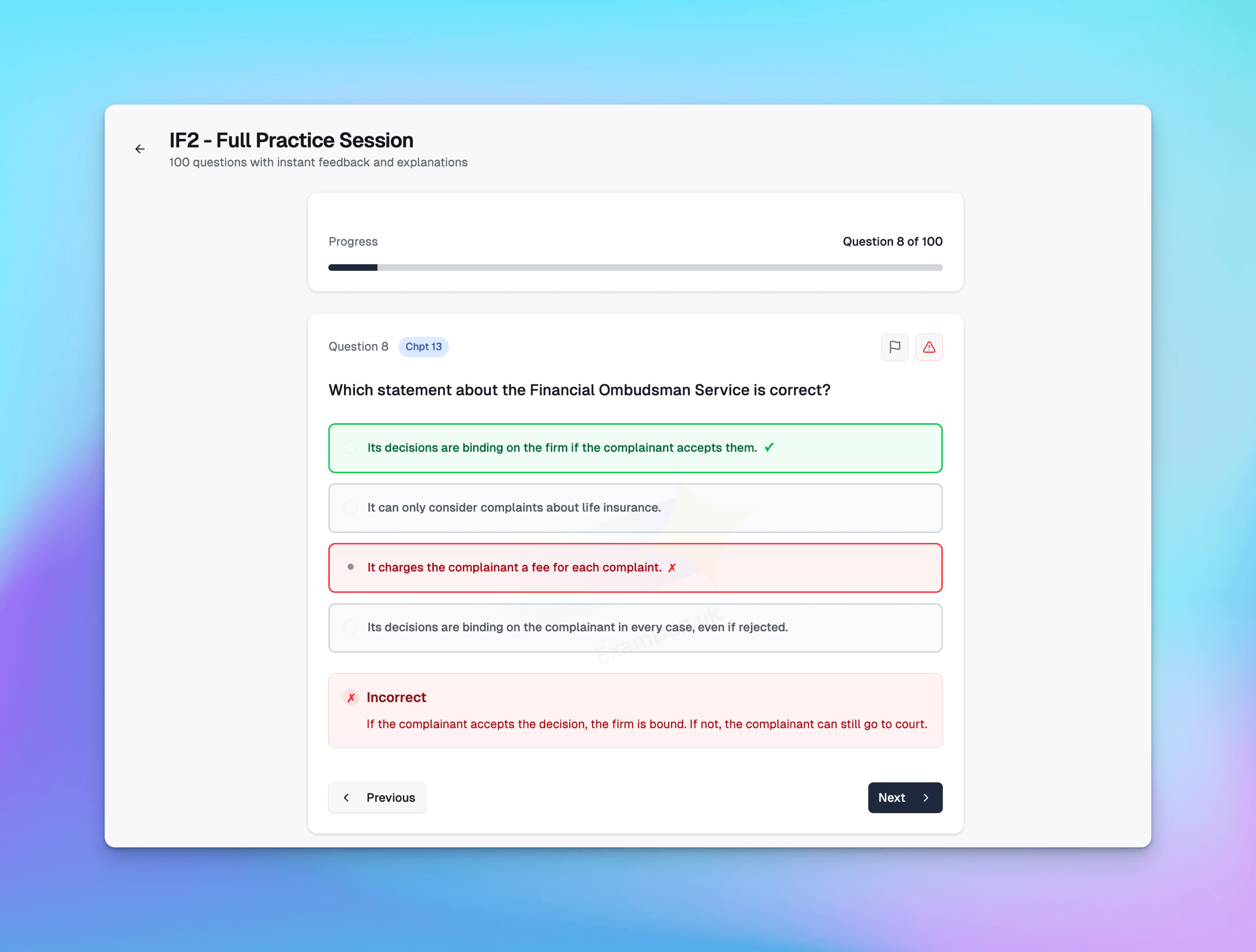
On ExamDen.uk, every question comes with a detailed explanation linked to the relevant learning outcome
Pecuniary Insurance
- Credit insurance. Non-payment by trade debtors.
- Fidelity guarantee. Employee dishonesty.
- Legal expenses. Legal costs for commercial disputes, employment tribunals, tax investigations.
- Suretyship and bonds. Performance bonds, bid bonds. Guaranteeing contractual obligations.
Health and Personal Accident
- Private medical insurance (PMI). Cover for private medical treatment. Moratorium vs full medical underwriting.
- Critical illness. Lump sum on diagnosis. ABI model definitions.
- Income protection. Regular income during incapacity. Deferred periods, benefit limits.
- Personal accident. Capital benefits for death, permanent disablement. Occupational cover.
- Travel insurance. Cancellation, medical expenses, baggage, personal liability.
Marine, Aviation and Specialist
- Marine. Hull insurance, cargo insurance (Institute Cargo Clauses A, B, C), freight liability.
- Aviation. Hull, liability, passenger liability.
- Specialist classes. Cyber insurance, engineering insurance, agricultural and livestock.
Quick test: Can you describe the key difference between third party only and TPFT motor cover? Between named perils and all risks? Between claims-made and losses-occurring liability policies?
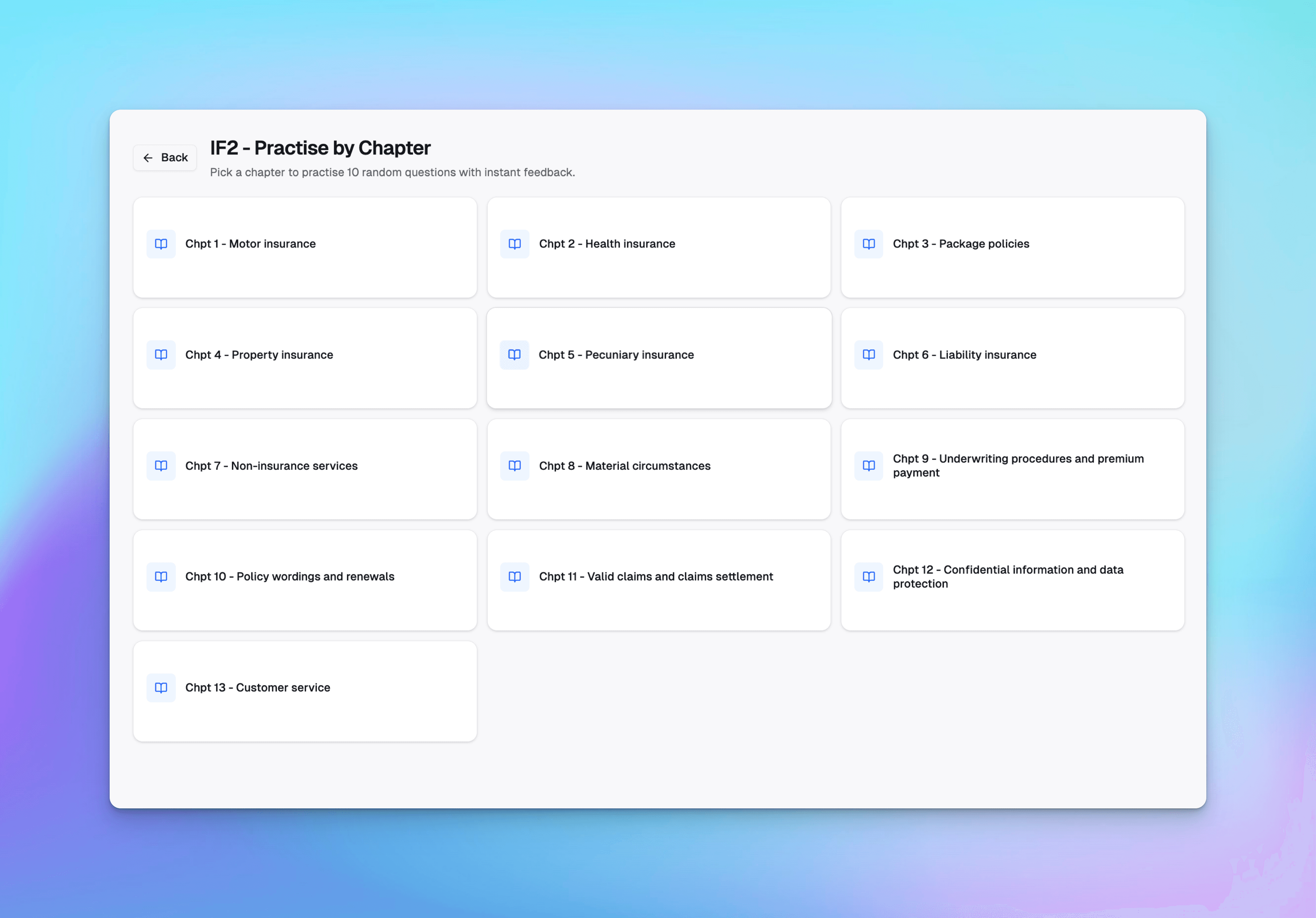
On ExamDen.uk, practise one learning outcome at a time, then sit a full mock in the real question count and time limit
LO2: Underwriting and Policy Wordings — 31 Questions (31%)
- Underwriting process. Proposal forms, statements of fact, risk assessment, acceptance, declination. Renewal, mid-term adjustment, cancellation.
- Policy structure. Schedule, operative clause (insuring clause), definitions, conditions, exclusions, endorsements, warranties.
- Standard wordings. ABI recommended wordings for fire and special perils and for "all risks." How they compare to bespoke wordings.
- Conditions. Conditions precedent to the contract (must be met before cover attaches), conditions precedent to liability (must be met before a claim is paid), innominate conditions. Breach consequences.
- Exclusions. War, nuclear, wear and tear, gradual deterioration, pollution, sonic boom, loss of data (unless by insured peril). Standard vs policy-specific exclusions.
- Insurance Act 2015. Duty of fair presentation, proportionate remedies (careless vs deliberate non-disclosure). Breach of warranty now suspends cover rather than discharging the insurer.
- Basis of rating. Sum insured, declared value, limit of indemnity, first loss. Average (condition of average) for under-insurance. Day-one basis.
Quick test: Can you calculate the Insurance Act 2015 proportionate remedy? If the correct premium would have been £2,000 but the insurer only charged £1,000 due to careless non-disclosure, and the claim is £50,000 — what does the insurer pay?
🎯 Practise Like the Real Exam
ExamDen.uk tracks your score by learning outcome so you see exactly where you're losing marks. No more guessing which topics to revise.
Start IF2 Practice →LO4: Claims — 21 Questions (21%)
- Claims process. Notification (time limits, conditions precedent), investigation, adjustment, settlement, recovery (subrogation, salvage). Role of the loss adjuster.
- Measurement of loss. Indemnity basis (market value at time of loss), reinstatement basis (cost of rebuilding), new for old (no deduction for wear and tear). Betterment.
- Average. Condition of average: if the sum insured is less than the value at risk, the claim is reduced proportionally. Day-one basis avoids average for inflationary increases.
- Motor claims. Repair vs total loss (write-off categories S, N). Knock-for-knock agreements. MIB claims (uninsured, untraced drivers). Credit hire.
- Property claims. Buildings, contents, stock, business interruption. How business interruption loss is calculated (gross profit method).
- Liability claims. Long-tail (asbestos, industrial disease). Claims-made triggers. Late notification. Reserving.
- Fraud. Fabricated claims, exaggerated claims. Insurer's remedies under the Insurance Act 2015 (entire claim forfeited for fraudulent claims, but prior legitimate claims not affected).
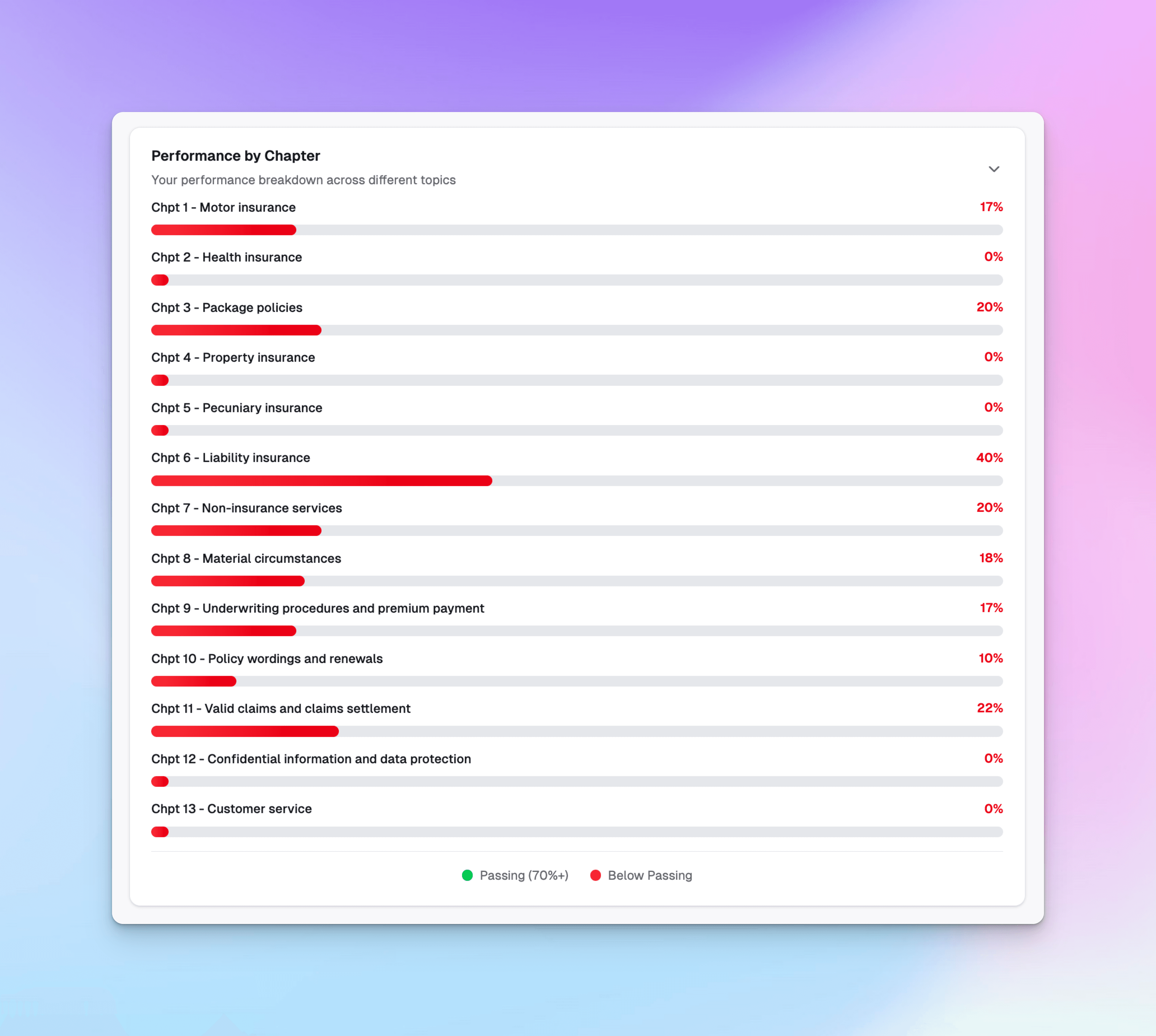
On ExamDen.uk, a timed mock shows your score against the 70% pass mark, and which learning outcomes are below it
LO6: ICT, Security and Data Protection — 5 Questions (5%)
- ICT in insurance. Online portals, electronic trading platforms, electronic placement (PPL, Whitespace). How technology is used in underwriting, claims and distribution.
- Data security. Cyber threats, firewalls, encryption, access controls, business continuity planning.
- Data protection. GDPR principles, lawful processing, data subject rights, breach notification. The DPO's role.
- Confidentiality. The duty of confidentiality in insurance, Chinese walls, conflict management.
LO7: Customer Service — 3 Questions (3%)
- FCA Consumer Duty. Delivering good outcomes: products and services, price and value, consumer understanding, consumer support.
- Treating Customers Fairly. The six consumer outcomes. How TCF applies to insurance.
- Complaints handling. FCA requirements: acknowledge promptly, final response within 8 weeks, referral to FOS. Root cause analysis.
- Vulnerable customers. Identifying and supporting vulnerable customers. FCA guidance.
LO3: Premium Calculation Principles — 2 Questions (2%)
- Rating factors. How insurers assess risk and set premiums. Motor: age, vehicle, claims history, postcode. Property: construction, occupation, sum insured, claims history.
- Premium components. Pure risk premium (expected claims), expenses loading, profit margin, reinsurance cost, IPT (Insurance Premium Tax).
- No-claims discount. How NCD works in motor insurance. Protected NCD.
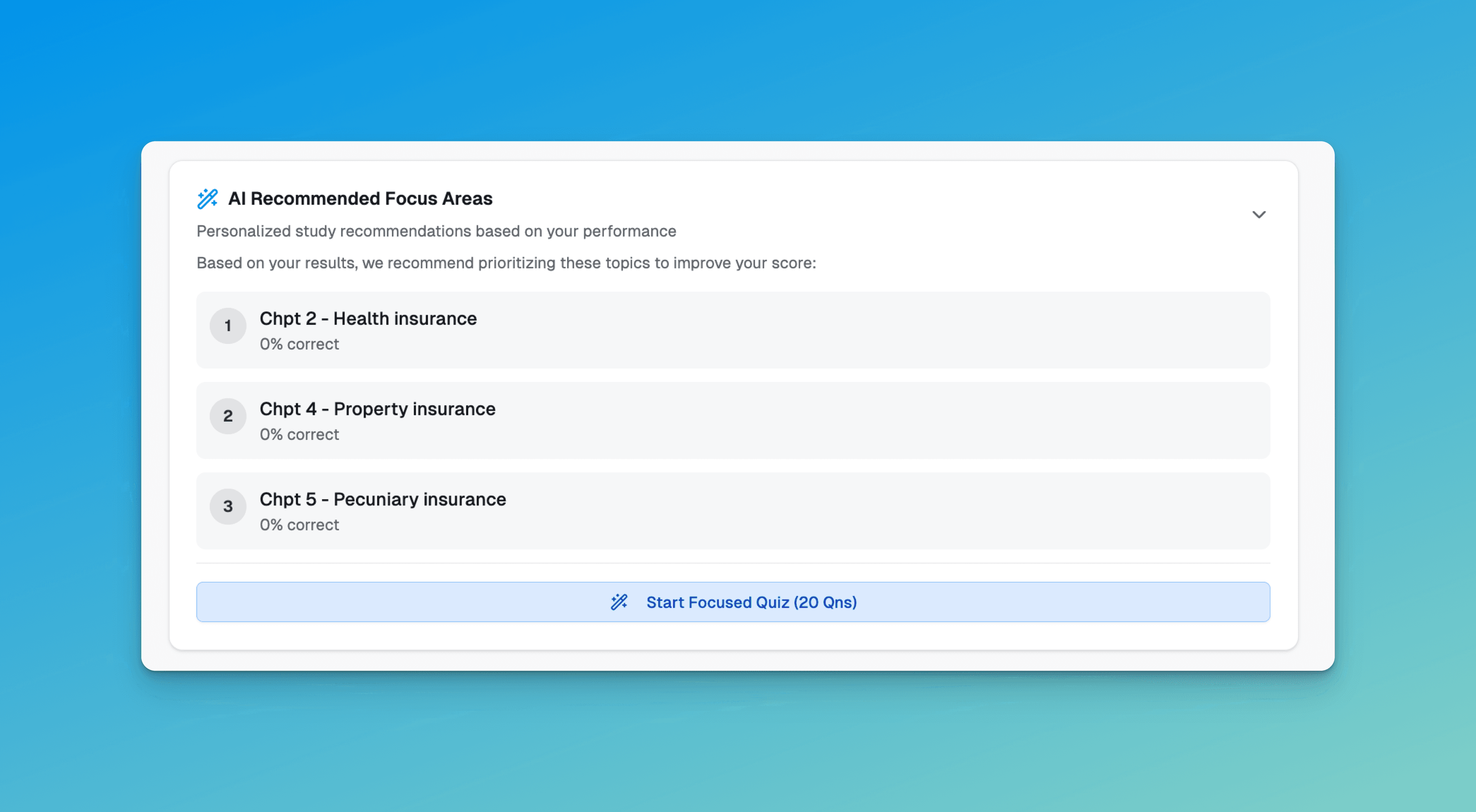
On ExamDen.uk, AI identifies your weakest areas and suggests practice questions to focus on
LO5: Policy Conditions Affecting Claims — 2 Questions (2%)
- Claims conditions. Notification requirements (time limits), duty to mitigate loss, cooperation with the insurer, not admitting liability.
- Conditions precedent to liability. Failure to comply can result in the insurer refusing the claim.
- Fraudulent claims provision. Under the Insurance Act 2015, a fraudulent claim forfeits the entire claim and allows the insurer to terminate the contract.
Final Revision Checklist
Before exam day, make sure you can:
- Name the levels of motor cover and what each includes/excludes
- Distinguish named perils from all risks cover
- List the compulsory insurances (employers' liability, motor) and their requirements
- Explain the ABI standard wordings for fire and special perils
- Calculate the Insurance Act 2015 proportionate remedy
- Describe the condition of average and how it reduces claims
- Explain the claims process from notification to settlement
- Sit at least one full timed mock under exam conditions — 100 questions, 2 hours
For more on study strategy and common mistakes, see our IF2 study guide. For the legal foundations that underpin IF2, see our IF1 study guide. To start practising, visit ExamDen's IF2 question bank.
IF2 Revision FAQs
Ready to Put This Strategy Into Action? 💯
Revise smarter. Practise IF2 by learning outcome and let AI pinpoint the topics you need to revisit.

The ExamDen.uk Team
ExamDen.uk builds exam-style question banks and timed mocks for CeMAP, Cert CII and CII R01–R05, helping UK professionals prepare for their financial services exams.