CII IF3 Revision Guide (2026): Learning Outcomes and Exam Tips
CII IF3 revision guide: every learning outcome explained with question counts, priority topics and exam tips for the Insurance Underwriting Process exam.
This IF3 revision guide covers every learning outcome in the exam, in order of question weight. Use it during your final revision to check that you've covered each topic and know where to focus your remaining study time.
For a broader study plan and common mistakes, see our complete IF3 study guide. For practice questions, try these 5 free IF3 mock questions.
📋 IF3 Exam Recap
- 75 standard MCQs in 2 hours — 96 seconds per question
- Pass mark: 70% (at least 53 out of 75)
- 11 learning outcomes
- No MR questions. Some calculations (loss ratios, EML, reinsurance)
---
LO2: Underwriting Procedures — 15 Questions (20%)
The biggest LO. Focus on:
- The underwriting process. Proposal → risk assessment → quotation → acceptance/declination → policy issue. Know every step.
- Information sources. Proposal forms, statements of fact, broker presentations, survey reports, CUE (Claims and Underwriting Exchange), MID (Motor Insurance Database), credit reference agencies.
- Underwriting authority. The authority granted to an individual underwriter. Delegated authority to intermediaries (coverholders, MGAs). Binding authority agreements. Referral triggers — when a risk must be referred to a senior underwriter.
- Documentation. Cover notes (temporary cover), policy schedules, certificates of insurance (motor, EL), endorsements, renewal notices, mid-term adjustment confirmations.
- Mid-term adjustments. Change of vehicle, change of address, additional drivers, change of use. How they're processed, documented and priced.
- Insurance Act 2015. The duty of fair presentation — how underwriters assess whether the insured has made a fair disclosure. What "ought to know" means in practice.
Quick test: Can you describe the difference between delegated authority and binding authority? Can you list three situations that trigger a referral?
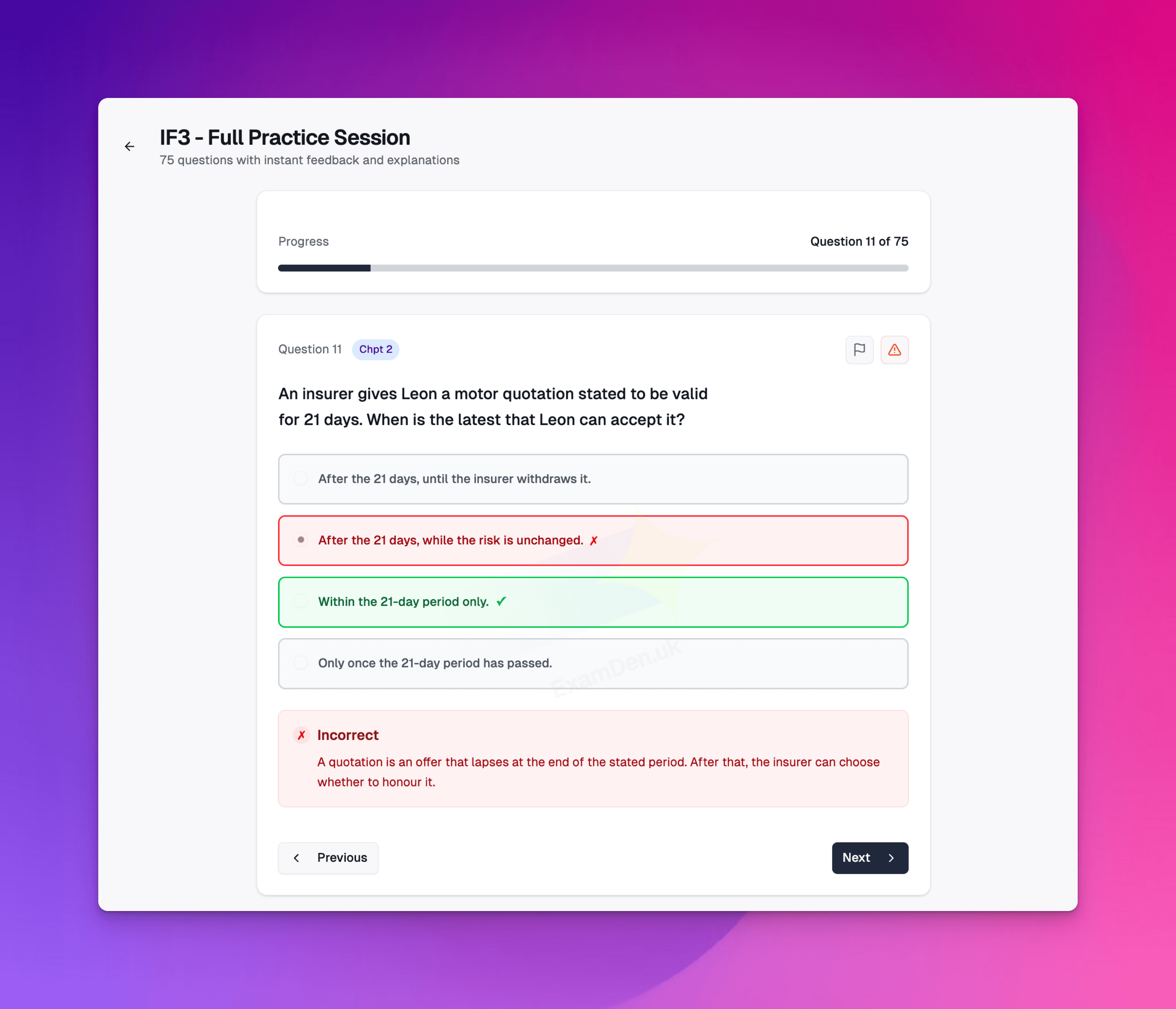
On ExamDen.uk, every question comes with a detailed explanation linked to the relevant learning outcome
LO8: Underwriting Considerations — 13 Questions (17%)
- Risk assessment. Evaluating the probability and potential severity of claims. Physical hazard (construction, location, security), moral hazard (integrity, financial pressure), morale hazard (carelessness).
- Estimated maximum loss (EML). The maximum single-loss exposure expressed as a percentage of total sum insured. How physical separation, fire breaks, sprinklers and construction affect EML. Know the calculation: value of worst-case single loss ÷ total sum insured.
- Accumulation. Concentration of risk in one area (postcode, flood zone, supply chain). How underwriters identify and manage accumulation.
- Anti-selection. Higher-risk proposers are more likely to buy insurance. How underwriters counter this through pricing, terms, exclusions and risk selection.
- Terms and conditions. Using excesses, deductibles, warranties, conditions precedent and exclusions to make an otherwise unacceptable risk acceptable. When to impose terms vs decline.
- Surveys. When to request a survey. Types: physical risk survey, fraud survey, motor engineer's report. How survey findings affect terms.
Quick test: If a factory complex has two buildings — one worth £3m and one worth £2m — and they're separated by a 50-metre gap with a fire wall, what's the EML?
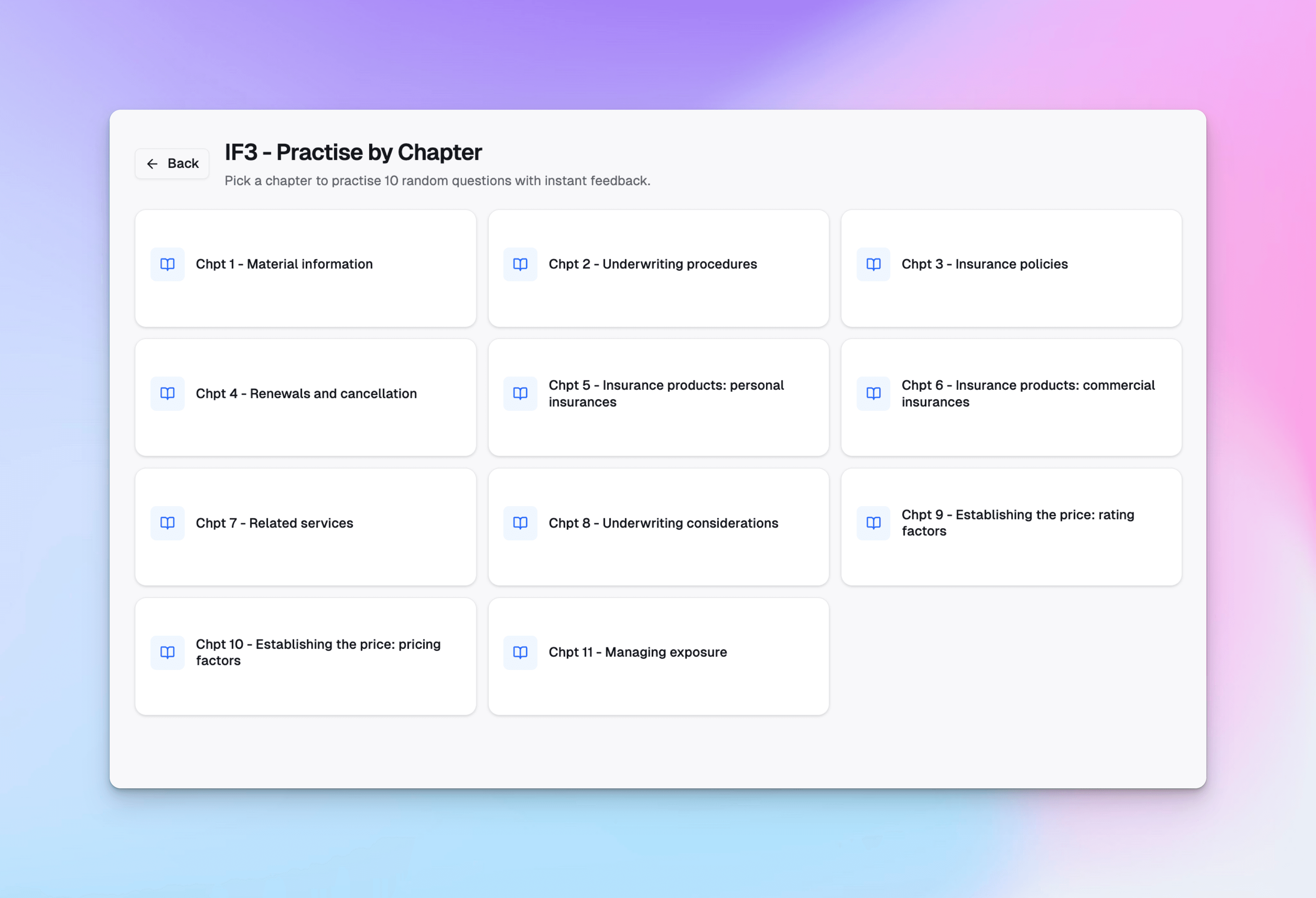
On ExamDen.uk, practise one learning outcome at a time, then sit a full mock in the real question count and time limit
LO3: Insurance Policies — 10 Questions (13%)
- Policy structure. Schedule, operative clause, definitions, conditions, exclusions, endorsements, warranties. How they work together.
- Types of policy. Valued (agreed sum) vs unvalued (indemnity at time of loss). Specific item vs floating (blanket). Claims-made vs losses-occurring. Composite vs comprehensive.
- Standard wordings. ABI fire and special perils, ABI "all risks." Lloyd's market wordings. Bespoke wordings for large commercial risks.
- Warranties. Express (stated in the policy) vs implied (by statute). Breach under the Insurance Act 2015 suspends cover; it no longer discharges the insurer.
- Conditions precedent. To the contract (must be met before cover starts) and to liability (must be met before a claim is paid). Consequences of breach.
LO9: Principles and Practices of Pricing — 10 Questions (13%)
- Premium components. Pure risk premium (expected claims), expenses loading, commission, profit margin, catastrophe loading, reinsurance cost.
- Loss ratio. Claims incurred ÷ premium × 100. A ratio above 100% means more paid out than collected.
- Combined ratio. Loss ratio + expense ratio. Below 100% = underwriting profit. Above 100% = underwriting loss.
- Rating methods. Manual rating (tariff/table-based), experience rating (individual claims history), burning cost (actual losses over time), exposure rating (based on risk characteristics).
- Insurance Premium Tax. Standard rate (12%), higher rate (20% for travel, appliance warranties). Exempt classes (long-term insurance, reinsurance, marine/aviation/transport).
- No-claims discount. How it works in motor insurance. Protected NCD. Introductory NCD for new drivers with clean records.
Quick test: If a portfolio collected £5m in premium and paid £3.5m in claims, what's the loss ratio? (Answer: 70%.)
🎯 Practise Like the Real Exam
ExamDen.uk tracks your score by learning outcome so you see exactly where you're losing marks. No more guessing which topics to revise.
Start IF3 Practice →LO11: Managing Exposure — 6 Questions (8%)
- Reinsurance. Proportional: quota share (fixed percentage of every risk), surplus treaty (cedes amounts above a retention). Non-proportional: excess of loss (pays above a retention per loss), stop loss (aggregate excess).
- Retention. The amount the insurer keeps for its own account. How retention levels are set — capital, risk appetite, reinsurance cost.
- Co-insurance. Sharing a risk between two or more insurers. Lead insurer and following market. How the premium is split.
- Aggregates. Monitoring total exposure to a single event or accumulation zone. How aggregate limits in reinsurance programmes work.
LO1: Material Circumstances — 5 Questions (7%)
- Material facts. Information that would influence a prudent underwriter's decision. Physical facts (construction, occupancy, security), moral facts (claims history, financial standing, convictions).
- Sources. Proposal forms, broker presentations, surveys, databases (CUE, MID), publicly available information.
- Duty of fair presentation. Under the Insurance Act 2015, the insured must disclose material circumstances they know or ought to know, in a "reasonably clear and accessible manner."
LO10: Pricing Factors — 5 Questions (7%)
- Motor rating factors. Age, driving experience, vehicle group, postcode, claims history, occupation, annual mileage, modifications.
- Property rating factors. Construction, occupancy, location (flood, subsidence, theft), fire protection, security, sums insured, claims history.
- Liability rating factors. Nature of business, turnover/wageroll, claims history, risk management procedures.
- Statistical data. How insurers use actuarial data, market data and their own portfolio data to set rates.
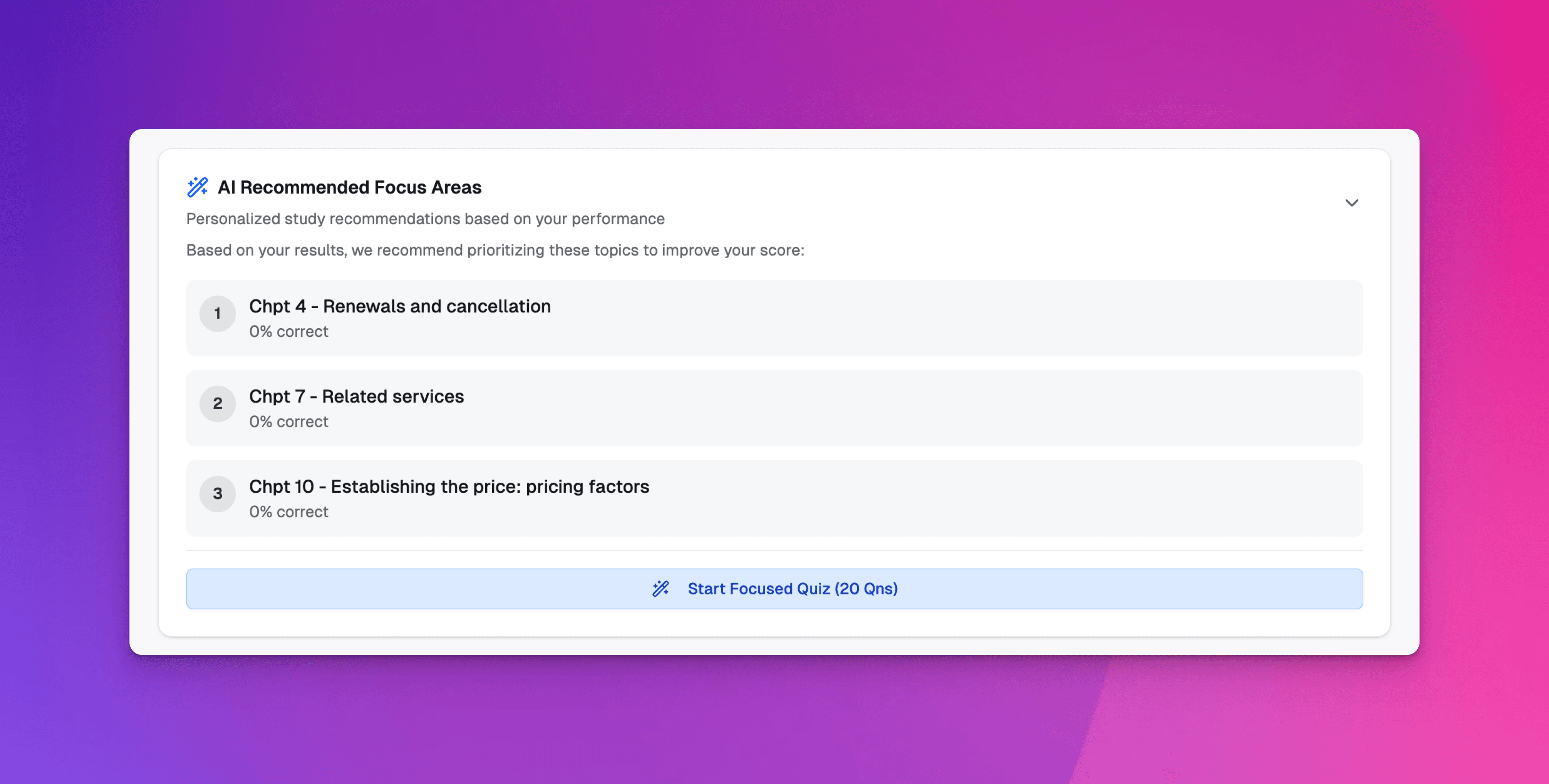
On ExamDen.uk, AI identifies your weakest areas and suggests practice questions to focus on
LO4: Renewals and Cancellation — 3 Questions (4%)
- Renewal process. Invitation to renew, renewal terms, premium adjustment, renewal conditions. Automatic renewal vs opt-in.
- Cancellation. Mid-term cancellation by the insured and by the insurer. Short-period rates vs pro-rata. Return premium calculations.
- MID updates. Insurers must update the Motor Insurance Database within 7 days of cancellation for private cars.
LO5: Personal Insurances — 3 Questions (4%)
- Motor. Rating factors, policy types, underwriting considerations for personal motor.
- Household. Buildings and contents, rating factors, flood and subsidence, non-standard construction.
- Travel and personal accident. Key underwriting considerations: destination, duration, pre-existing conditions, occupational risk.
LO6: Commercial Insurances — 3 Questions (4%)
- Commercial property. Fire, special perils, all risks, business interruption. Underwriting large commercial risks.
- Commercial motor. Fleets, goods vehicles, plant. Different underwriting approach from personal motor.
- Liability. Employers' liability (compulsory), public liability, products liability, professional indemnity. Rating by turnover or wageroll.
LO7: Support Services — 2 Questions (3%)
- Loss adjusters. Role in claims investigation and settlement. Independence and professional standards.
- Surveyors. Risk surveyors for pre-inception inspection. How survey findings influence underwriting terms.
- Other services. Claims management companies, rehabilitation services, legal services, forensic accountants.
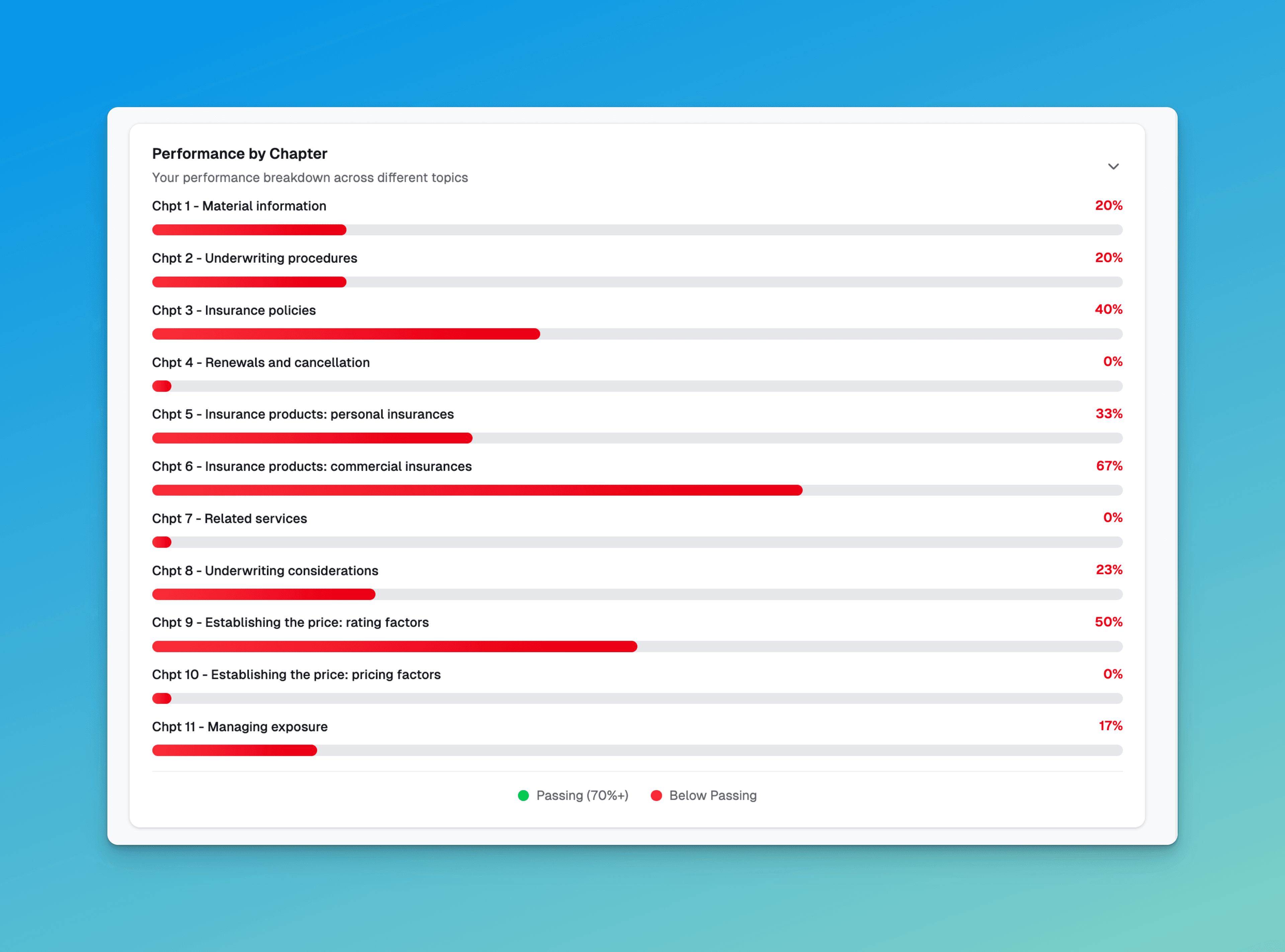
On ExamDen.uk, a timed mock shows your score against the 70% pass mark, and which learning outcomes are below it
Final Revision Checklist
Before exam day, make sure you can:
- Describe the underwriting process from proposal to policy issue
- Calculate EML given a scenario with separated buildings
- Calculate a loss ratio and a combined ratio
- Distinguish proportional from non-proportional reinsurance
- Explain delegated authority and referral triggers
- Name the key rating factors for motor, property and liability
- Describe the Insurance Act 2015 duty of fair presentation and its underwriting implications
- Sit at least one full timed mock under exam conditions — 75 questions, 2 hours
For more on study strategy and common mistakes, see our IF3 study guide. For the product foundations that IF3 builds on, see our IF2 study guide. To start practising, visit ExamDen's IF3 question bank.
IF3 Revision FAQs
Ready to Put This Strategy Into Action? 💯
Revise smarter. Practise IF3 by learning outcome and let AI pinpoint the topics you need to revisit.

The ExamDen.uk Team
ExamDen.uk builds exam-style question banks and timed mocks for CeMAP, Cert CII and CII R01–R05, helping UK professionals prepare for their financial services exams.