How to Pass CII IF3 (2026): Study Guide and Exam Tips
A practical guide to passing CII IF3 — covering the exam format, all 11 learning outcomes, the 70% pass mark, underwriting procedures, pricing, exposure management and common mistakes.
IF3 — Insurance Underwriting Process — is the specialist underwriting unit of the Cert CII (Certificate in Insurance). It covers how insurers assess, accept and price risk — from the initial proposal through to renewal, cancellation and reinsurance.
Where IF2 introduces underwriting alongside products and claims, IF3 goes deep. It's the unit for anyone working in — or moving into — an underwriting role.
IF3 has 75 questions in 2 hours, giving you 96 seconds per question — more generous than the 100-question exams. The pass mark is 70%, so you need at least 53 correct and can get 22 wrong.
📋 IF3 Quick Summary
- 75 standard MCQs in 2 hours: no multiple-response questions
- Pass mark: 70% (at least 53 out of 75)
- Heaviest learning outcomes: LO2 (15 questions) — underwriting procedures, LO8 (13) — underwriting considerations
- On-demand exam: book almost any day, sit at a test centre or online with a remote invigilator
- Covers: material circumstances, underwriting procedures, policies, renewals, personal and commercial insurance, pricing, rating factors and exposure management
IF3 Exam Format
IF3 has 75 questions in 2 hours — 96 seconds per question on average. That's noticeably more generous than IF1 or IF2 (72 seconds for 100 questions).
All 75 questions are standard multiple-choice (pick one from four). There are no multiple-response questions — every question is worth one mark, with no all-or-nothing marking.
The pass mark is 70%. With 75 questions you need at least 53 correct, meaning you can get 22 wrong. No marks are deducted for incorrect answers, so always attempt every question.
Some questions in LO9 and LO11 involve calculations — loss ratios, estimated maximum loss, reinsurance retentions. A silent, non-programmable calculator is permitted.
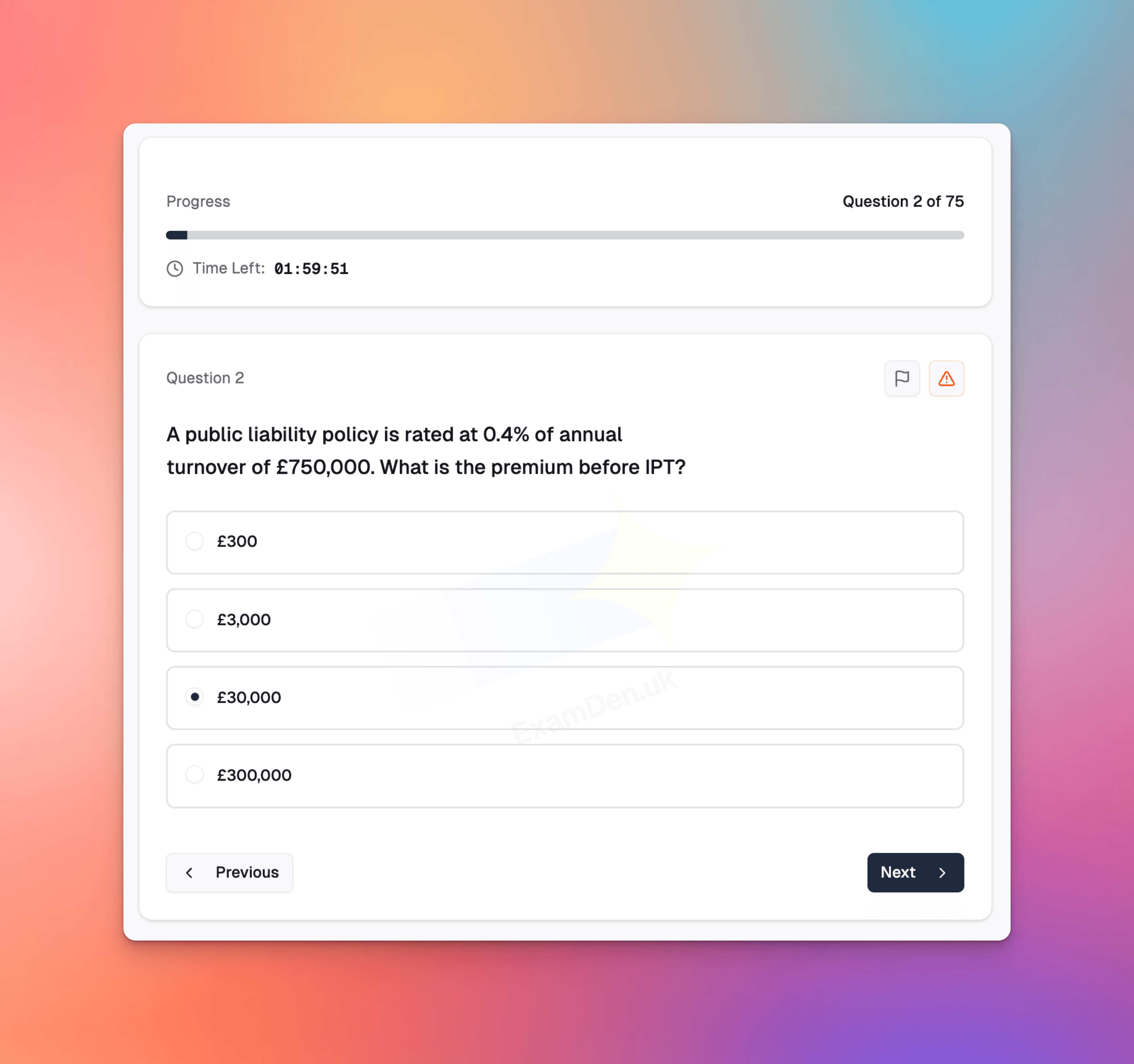
On ExamDen.uk, timed mocks use the same question count, time limit and pass mark as the real IF3 exam
Question Distribution by Learning Outcome
| LO | Topic | Questions | % of exam |
|---|---|---|---|
| 2 | Underwriting procedures | 15 | 20% |
| 8 | Underwriting considerations | 13 | 17% |
| 3 | Insurance policies | 10 | 13% |
| 9 | Principles and practices of pricing | 10 | 13% |
| 11 | Managing exposure | 6 | 8% |
| 1 | Material circumstances | 5 | 7% |
| 10 | Pricing factors | 5 | 7% |
| 4 | Renewals and cancellation | 3 | 4% |
| 5 | Personal insurances | 3 | 4% |
| 6 | Commercial insurances | 3 | 4% |
| 7 | Support services | 2 | 3% |
IF3 has 11 learning outcomes. Four LOs dominate: LO2 (procedures, 15 questions), LO8 (considerations, 13 questions), LO3 (policies, 10 questions) and LO9 (pricing, 10 questions). Together they make up 64% of the exam.
---
LO2: Underwriting Procedures — 15 Questions
LO2 is the biggest learning outcome, covering the day-to-day mechanics of underwriting.
What it tests:
- The underwriting process. How a risk is presented (proposal forms, statements of fact, broker submissions), assessed and accepted or declined. The underwriting cycle.
- Information sources. Proposal forms, claims histories, survey reports, credit checks, MID (Motor Insurance Database), CUE (Claims and Underwriting Exchange). How each source informs the decision.
- Underwriting authority. Delegated authority, binding authority, referral procedures. How authority limits work within an insurer and with intermediaries (MGAs, coverholders).
- Documentation. Cover notes, policy schedules, certificates of insurance, endorsements, renewal notices. What each document does and when it's issued.
- Mid-term adjustments. Changes to the risk during the policy period — new vehicles, change of address, additional insured. How they're processed and priced.
- Compliance. The duty of fair presentation under the Insurance Act 2015. How underwriters assess whether a disclosure is adequate.
Study approach: LO2 is procedural. Map out the underwriting workflow from proposal to policy issue. For each step, know the documents produced, the decisions made and the regulatory requirements.
LO8: Underwriting Considerations — 13 Questions
What it tests:
- Risk assessment. How underwriters evaluate the probability and severity of potential claims. Physical hazard, moral hazard, morale hazard.
- Estimated maximum loss (EML). How to calculate the EML for a risk — the worst-case loss the underwriter expects. How EML affects acceptance and pricing.
- Accumulation. The risk of multiple losses from a single event (natural catastrophe, terrorism, supply chain failure). How underwriters manage accumulation exposure.
- Selection of risk. Anti-selection (adverse selection) — why higher-risk proposers are more likely to seek insurance. How underwriters counter anti-selection.
- Terms and conditions. How underwriters use excesses, deductibles, warranties, conditions and exclusions to manage risk. When to impose special terms vs decline.
- Referral. When a risk falls outside the underwriter's authority or experience and must be referred to a senior underwriter, the lead underwriter or a specialist.
Study approach: LO8 is the analytical heart of IF3. The EML calculation is a recurring exam question — practise reading a scenario and identifying the maximum single-loss exposure as a percentage of the total sum insured.
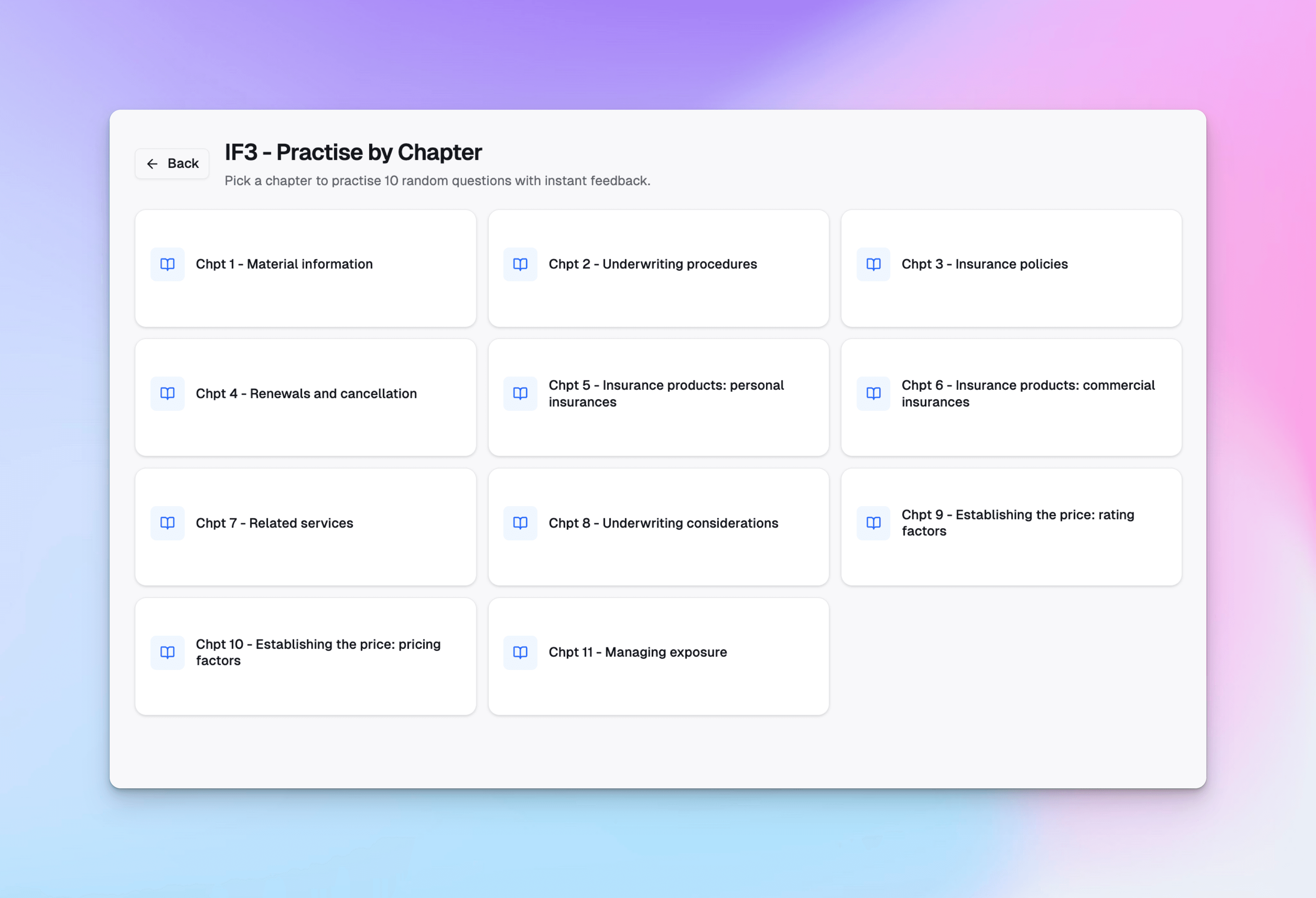
On ExamDen.uk, practise one learning outcome at a time, then sit a full mock in the real question count and time limit
LO3: Insurance Policies — 10 Questions
What it tests:
- Policy structure. The schedule, operative clause, definitions, conditions, exclusions, endorsements, warranties. How they work together.
- Types of policy. Valued vs unvalued, specific vs floating, claims-made vs losses-occurring, composite vs comprehensive.
- Standard wordings. ABI recommended wordings, Lloyd's market wordings. How bespoke wordings differ.
- Policy conditions. Conditions precedent to the contract, conditions precedent to liability. The consequences of breach under common law and the Insurance Act 2015.
- Warranties. Express and implied warranties. The Insurance Act 2015 changes — breach suspends cover rather than discharging the insurer.
LO9: Principles and Practices of Pricing — 10 Questions
What it tests:
- Premium components. Risk premium (expected claims cost), expense loading (admin, commission), profit margin, catastrophe loading, reinsurance cost.
- Loss ratio. Claims incurred ÷ premium × 100. How underwriters use loss ratios to assess portfolio profitability.
- Combined ratio. Loss ratio + expense ratio. The target for profitability.
- Rating methods. Manual rating, experience rating, burning cost, exposure rating. When each is appropriate.
- Insurance Premium Tax (IPT). Standard rate, higher rate, exempt classes. How IPT affects the premium the customer pays.
- No-claims discount. How NCD works, protected NCD, introductory NCD.
Study approach: The loss ratio calculation is a near-certainty in the exam. Know the formula cold: claims incurred ÷ premium × 100. Also know the combined ratio and what a ratio above 100% means (underwriting loss).
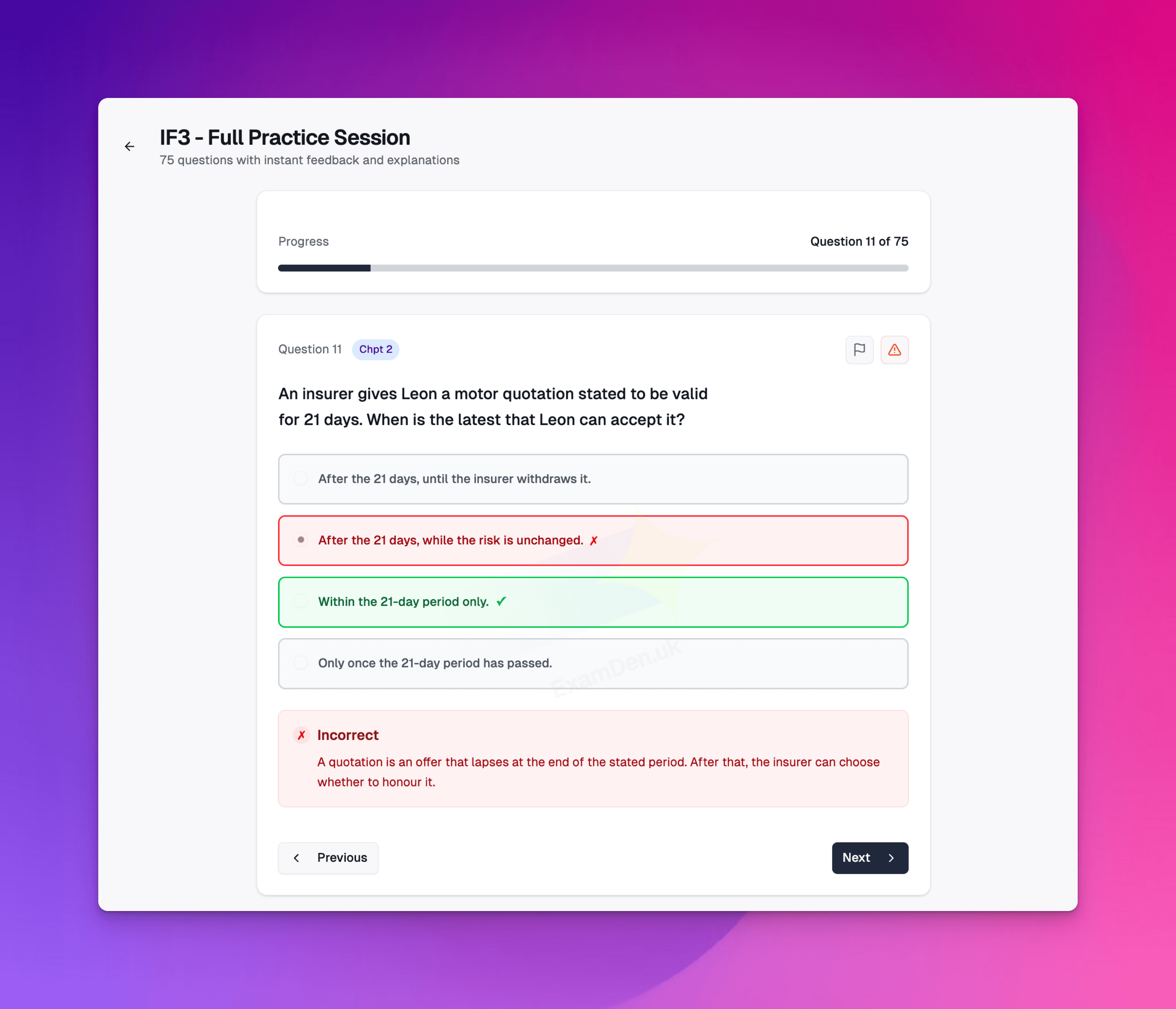
On ExamDen.uk, every question comes with a detailed explanation linked to the relevant learning outcome
🎯 Practise Like the Real Exam
ExamDen.uk tracks your score by learning outcome so you see exactly where you're losing marks. No more guessing which topics to revise.
Start IF3 Practice →Common Mistakes That Cost Marks
1. Underestimating LO2 and LO8.
These two LOs carry 28 questions — 37% of the exam. They're the procedural and analytical core of underwriting. Candidates who treat them as "common sense" without studying the specifics lose marks on technical details like delegated authority structures or EML calculations.
2. Getting the loss ratio formula wrong.
Loss ratio = claims incurred ÷ premium × 100. Not premium ÷ claims. The exam tests this directly. Know the difference between loss ratio and combined ratio.
3. Confusing EML with total sum insured.
The estimated maximum loss is the worst single-loss exposure, not the total insured value. If a site has two buildings a mile apart, a single fire won't destroy both — the EML is the value of the larger building, not the total.
4. Neglecting the small LOs.
LO4 (renewals, 3 questions), LO5 (personal insurance, 3 questions), LO6 (commercial insurance, 3 questions) and LO7 (support services, 2 questions) carry 11 marks. At 70% pass mark with 75 questions, those 11 marks matter.
5. Not practising the calculations.
LO9 (pricing) and LO11 (managing exposure) both involve calculations — loss ratios, combined ratios, EML percentages, reinsurance retentions. They're simple maths, but under exam pressure you need to be fast and accurate.
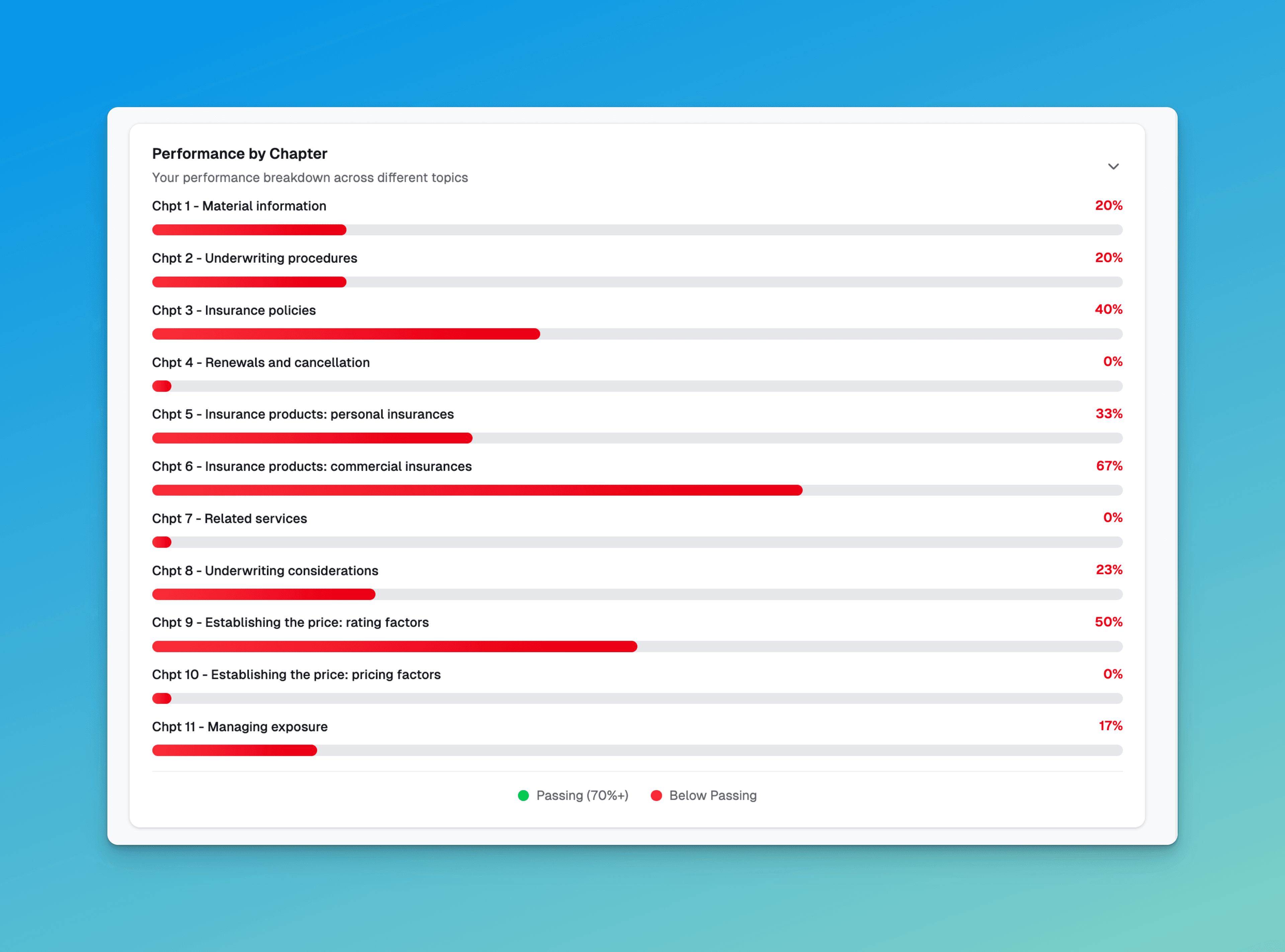
On ExamDen.uk, a timed mock shows your score against the 70% pass mark, and which learning outcomes are below it
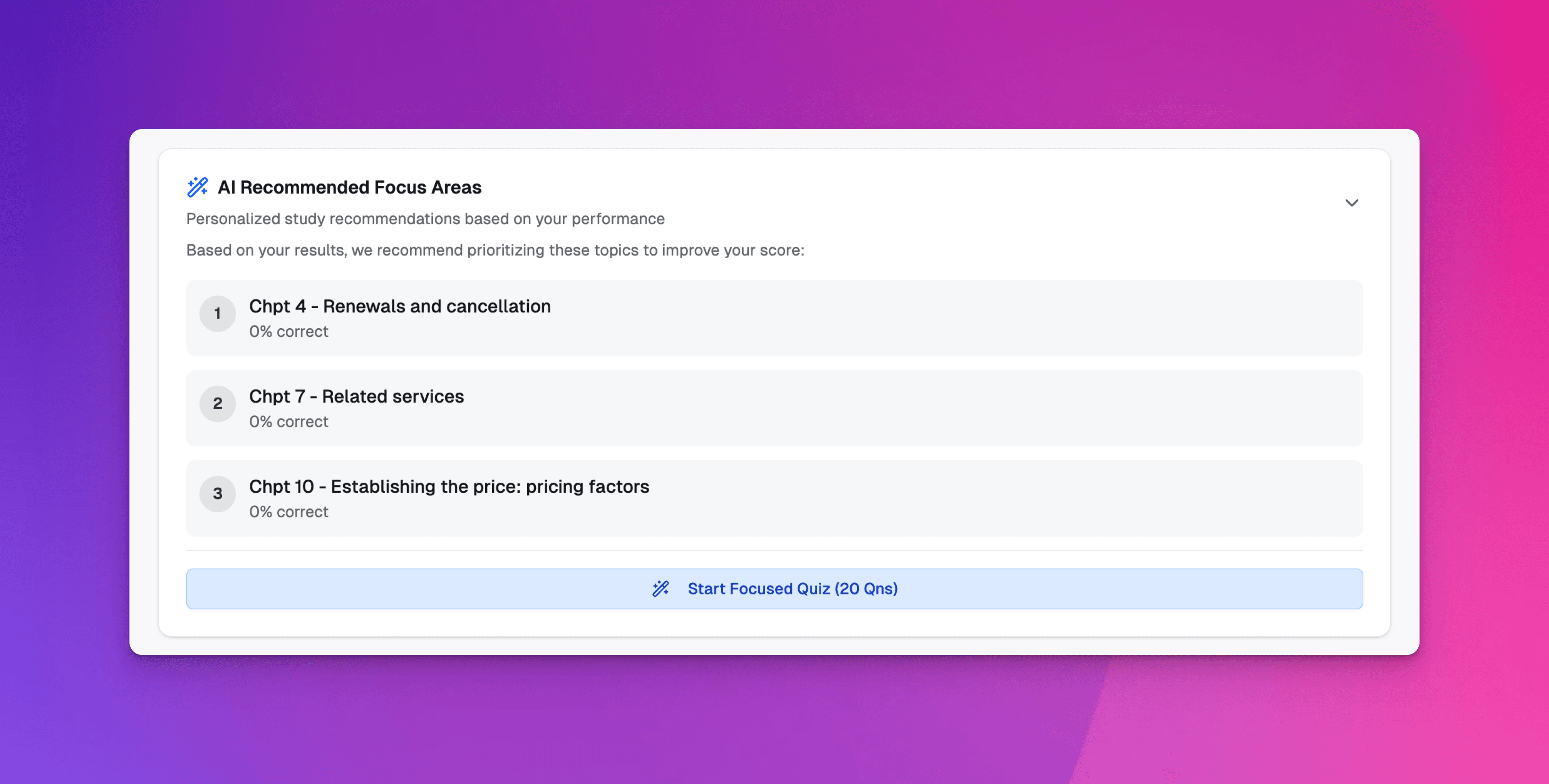
On ExamDen.uk, those weak learning outcomes become a short focus list for your next revision session
How IF3 Fits Into the Cert CII
IF3 is the specialist underwriting unit in the CII Certificate in Insurance (Cert CII). It builds directly on the product and underwriting knowledge from IF2 — where IF2 introduces underwriting as one of several topics, IF3 covers it in depth.
IF3 pairs naturally with IF4 (Insurance Claims Handling Process) — together they cover the two sides of the insurance operation. The underwriting knowledge from IF3 also feeds into the product-specialist units like IF5 (Motor) and IF6 (Household), and the broking practice unit I10.
Start Practising
The fastest way to know whether you're ready for IF3 is to take a timed mock. ExamDen's IF3 question bank has hundreds of exam-style questions — timed mocks in the real CII format, and AI that pinpoints which learning outcomes you need to work on.
Want to try a few questions first? Here are 5 free IF3 mock questions with answers. If you're looking for past papers, read why the CII doesn't release them, and what to use instead.
For registration, fees and booking, see our guide to registering for CII exams.
CII IF3 FAQs
Ready to Put This Strategy Into Action? 💯
Practise with exam-style IF3 questions, timed mocks and AI that shows you which learning outcomes to revise.

The ExamDen.uk Team
ExamDen.uk builds exam-style question banks and timed mocks for CeMAP, Cert CII and CII R01–R05, helping UK professionals prepare for their financial services exams.