Is CeMAP Hard? What Makes Each Module Different
An honest look at how hard CeMAP is — what makes CeMAP 1 the toughest for most people, why CeMAP 3 catches people who think they're prepared, and what you can do about it.

The honest answer: CeMAP isn't impossibly hard, but it's harder than most people expect. The 70% pass mark sounds achievable until you realise how much detail the exams test and how little room for error you have.
Let's break down what makes each module difficult, which one is the hardest, and what actually determines whether you pass or fail.
📋 The Short Answer
- CeMAP 1 is the hardest for most candidates — LIBF's own FAQ confirms it
- CeMAP 2 is the most time-pressured — MRT1 gives you just 72 seconds per question
- CeMAP 3 is the trickiest — the case studies can make several answers look right
- Preparation is what makes the difference — candidates who do enough timed practice pass; candidates who only read the study text struggle
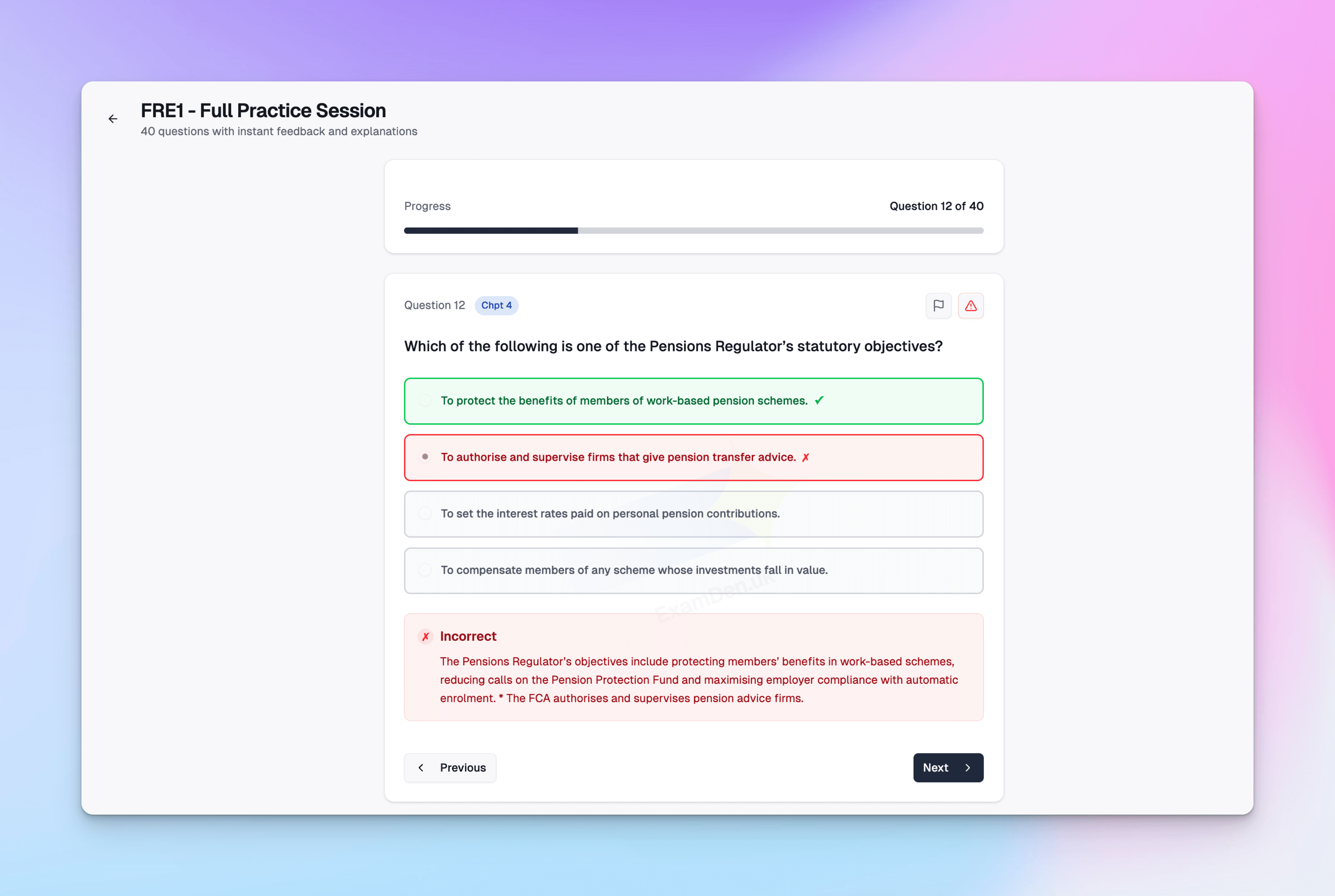
On ExamDen.uk, every question comes with a clear explanation linked to the relevant learning outcome
What the Numbers Say
LIBF doesn't publish official pass rates for CeMAP. Some training providers estimate that around 65–70% of candidates pass on their first attempt, but this is an aggregate estimate across providers, not an official LIBF figure.
What we do know is that LIBF's own FAQ says CeMAP 1 "is often considered the most challenging module". One training provider's survey found that around 50% of candidates who passed named CeMAP 1 as the hardest. Forum posts and Reddit threads are consistent with this — CeMAP 1 gets the most complaints.
But difficulty is module-specific. Each one is hard in a different way.
CeMAP 1: The Regulation Wall
Why it's hard: the content is abstract, regulation-heavy and doesn't feel like a mortgage qualification.
FRE1 covers the structure of UK financial services regulation — FCA permissions, consumer credit, AML, legal concepts like duty of care and negligence. It's the kind of material where you can read a chapter and feel like you understood it, then find that the exam questions test specific details you didn't commit to memory.
FRE2 adds professional skills and ethics, which is more applied — but the ethical scenario questions can be tricky because two answers will both sound reasonable and you need to pick the one grounded in the specific regulatory principle.
What trips people up:
- Treating it as background reading instead of examinable detail
- Not practising the case studies (they're worth 15 out of 40 marks per paper)
- Underestimating FCA permissions and AML content
- Expecting the ethics questions to be common sense (they're not — they test specific principles)
How to handle it: focused study on FRE1 before you attempt FRE2, with practice questions after every learning outcome. Don't move on from a topic until you can answer questions on it correctly. See our CeMAP 1 study guide for the full approach.
CeMAP 2: The Time Pressure
Why it's hard: MRT1 has 50 questions in 60 minutes — 72 seconds each — and the calculations add time pressure on top.
Most candidates find the CeMAP 2 content more intuitive than CeMAP 1 because it's about actual mortgages: products, borrowers, valuations, arrears. The difficulty comes from the volume (11 learning outcomes in MRT1 alone) and the timing.
What trips people up:
- Running out of time on MRT1 — this is the most common complaint
- Working out calculations from scratch instead of knowing the method
- Confusing similar products (fixed vs tracker vs discount vs capped)
- Underestimating the arrears and repossession content in MRT2
How to handle it: practise calculations until they're automatic, and take at least 2–3 full timed mocks before the real MRT1. See our CeMAP 2 study guide.
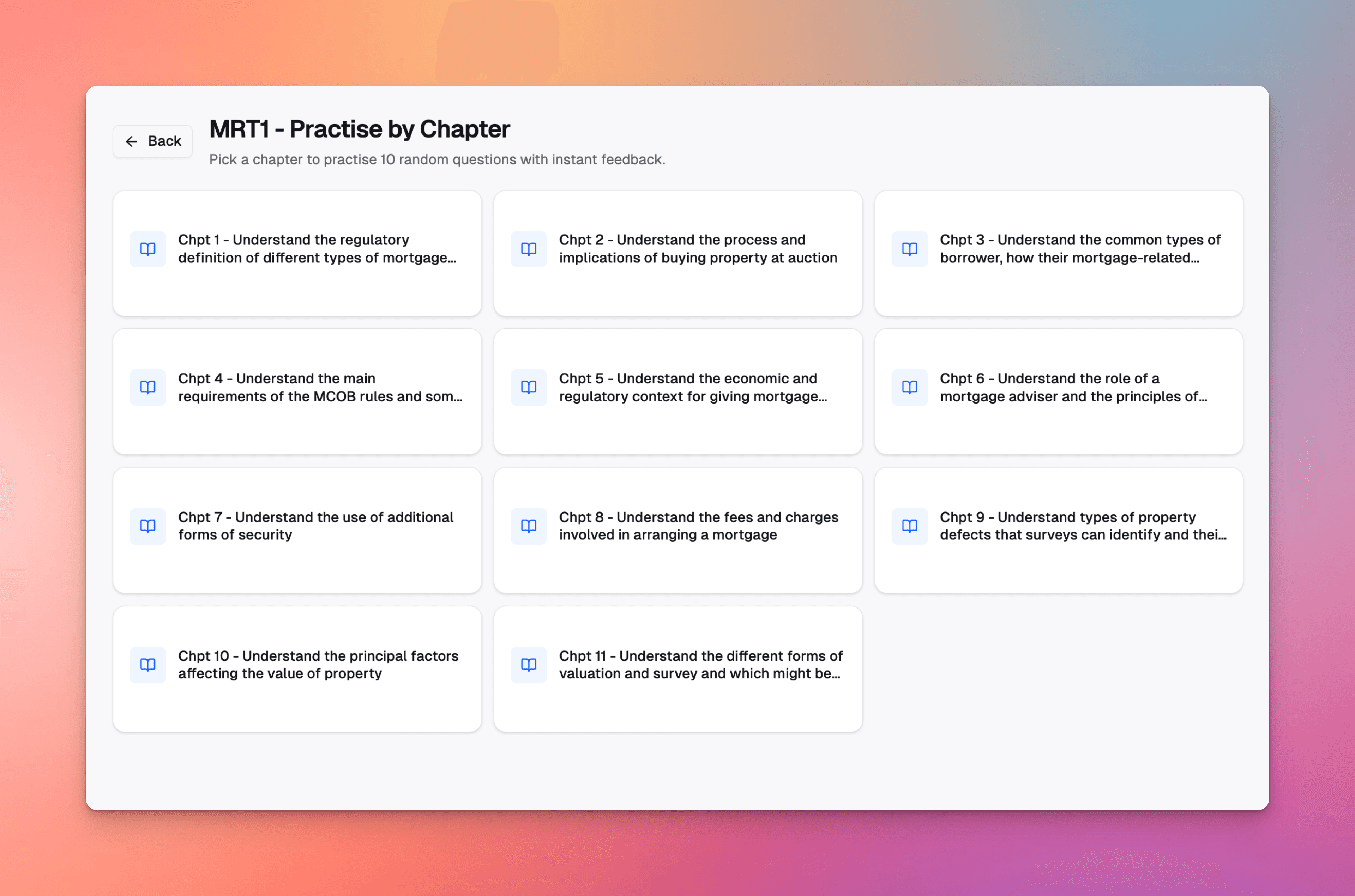
On ExamDen.uk, practise one chapter at a time, then sit a full mock in the real question count and time limit
CeMAP 3: The Application Test
Why it's hard: the case studies test application, not recall. Several answers look right, and you have to pick the one supported by the scenario.
CeMAP 3 has 6 case studies with 10 questions each, over 2 hours. The scenarios describe a client's circumstances — income, property, existing mortgage, financial goals — and you answer questions about what advice to give, which products to recommend, and which rules apply.
The difficulty is that general knowledge isn't enough. You might know that a repayment mortgage is usually recommended for first-time buyers, but the case study might present a specific set of circumstances where a different product is more suitable. The correct answer depends on the details in the scenario.
What trips people up:
- Answering from general principles instead of from the case-study facts
- Not reading the scenario carefully enough
- Missing the detail that changes the answer
- Spending too long on the first few case studies and rushing the last ones
How to handle it: practise with case-study questions and train yourself to identify the key facts before answering. See our CeMAP 3 case study guide.
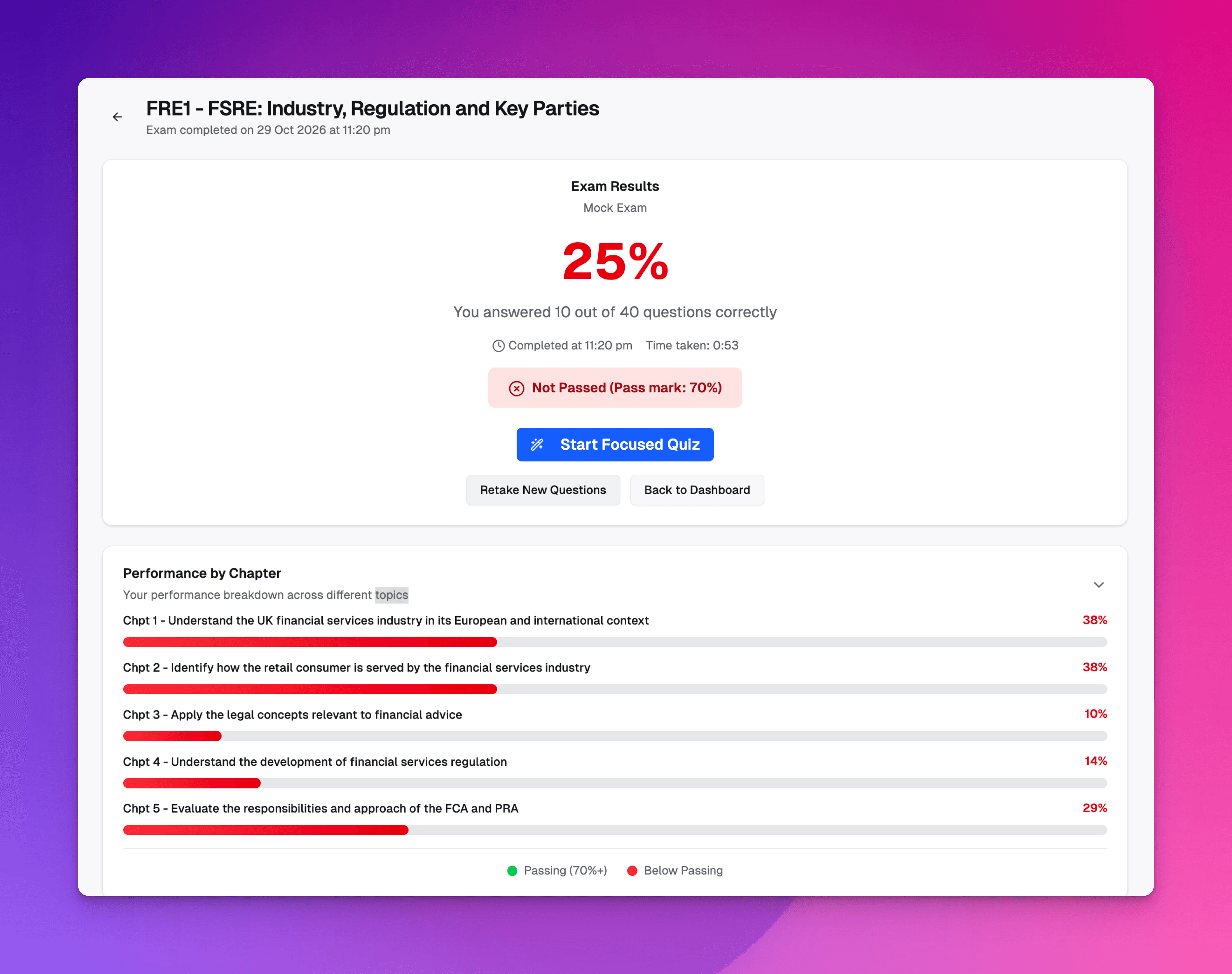
On ExamDen.uk, a timed mock shows your score against the 70% pass mark, and which chapters are below it
The Error Margin Is Smaller Than You Think
Every unit needs 70%. Here's what that actually means:
| Unit | Questions | Max Wrong |
|---|---|---|
| FRE1 | 40 | 12 |
| FRE2 | 40 | 12 |
| MRT1 | 50 | 15 |
| MRT2 | 40 | 12 |
| ASEW/ASSC | 60 | 18 |
Twelve wrong answers on a 40-question paper sounds comfortable. But if you're weak on two learning outcomes, and each one has 5–6 questions, you've already used up most of your margin. Add a few careless mistakes and you're below 70%.
This is why most training providers recommend only sitting a unit when you're consistently scoring 75–80% on timed mocks. A 5–10% buffer accounts for the questions that are worded differently from what you've practised.
What Actually Determines Whether You Pass
Based on what training providers report and candidates describe on forums, the biggest predictors of success are:
- Timed mock scores. Candidates who consistently score 75%+ on full, timed mocks pass. Candidates who skip mocks or only do untimed practice struggle.
- Targeted revision. Candidates who identify their weak learning outcomes and focus on those improve fastest. Candidates who re-read the entire study text don't.
- Case-study practice. For FRE1, FRE2 and especially CeMAP 3, practising case studies specifically is essential. The skill of reading a scenario and applying rules to it is different from the skill of recalling facts.
- Self-imposed deadlines. With on-demand exams, there's no booked date creating urgency. Candidates who set a target date and stick to it are more likely to actually sit the exam.
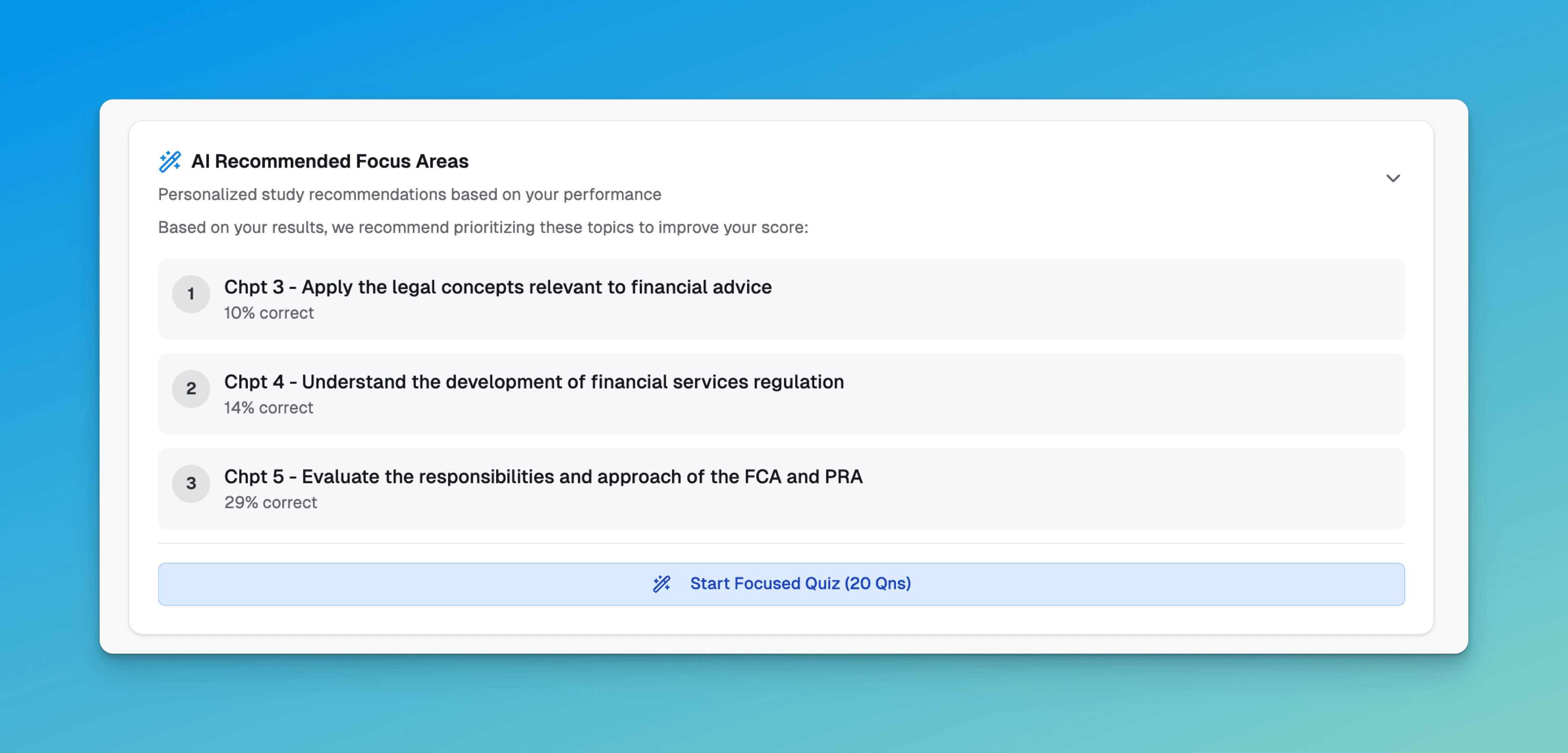
On ExamDen.uk, those weak chapters become a short focus list for your next revision session
Is CeMAP Worth It?
Yes. CeMAP is the most widely held mortgage adviser qualification in the UK. It meets the FCA's education standard, is required for the Mortgage Adviser apprenticeship, and is the standard entry point for anyone wanting to advise on mortgages.
The investment is £735 for the full qualification plus your study time. If you fail a unit, resits cost £120 each. Getting it right with enough preparation is cheaper, faster and less stressful than resitting.
For a complete study plan across all three modules, see our complete CeMAP study guide.
CeMAP Difficulty FAQs
Ready to Put This Strategy Into Action? 💯
Find out if you're ready. Take a timed mock and see exactly where you stand against the 70% pass mark.

The ExamDen.uk Team
ExamDen.uk builds exam-style question banks and timed mocks for CeMAP, Cert CII and CII R01–R05, helping UK professionals prepare for their financial services exams.